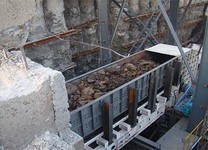
The Banana Screen, as your core screening equipment in industries such as coal, mining, and metallurgy, with its multi-stage inclined screen surface, 1-2 layer structure configuration, and a wide processing capacity ranging from 100 to 2500 t/h, can help you adapt to various dry and wet working conditions and achieve high-precision screening of fine materials.
However, please note: Installation and commissioning are by no means simple equipment assembly; they are a crucial step that directly affects the operational performance of the Banana Screen throughout its entire lifecycle. If you do not follow proper procedures during the installation and commissioning stages, even if the equipment itself has excellent performance, it will be difficult to achieve the expected results in actual production.
Next, we will systematically explain to you the significant importance of professional installation and commissioning for the operation of the Banana Screen from five aspects: screening efficiency, equipment lifespan, operational safety, cost control, and working condition adaptation. This will help you fully grasp this crucial step and lay a solid foundation for subsequent production and operation.

Ensuring The Screening Efficiency Of Banana Screens
Precise Installation Of Multiple Slope Angle Screen Surfaces
The core advantage of the Banana Screen lies in the synergy of multiple slope angle screen surfaces. The feeding end is typically designed with a large slope angle of 20° - 25°, aiming to quickly guide the materials to separate and avoid material accumulation. If the deviation of the slope angle at the feeding end exceeds ±1° during installation, it will cause the separation speed of the materials to slow down, prolong the retention time of the upper layer materials, and directly affect the overall screening rhythm.
The gentle slope angle of 5° - 10° at the discharging end is to provide sufficient screening time for fine particles. If the slope angle here is too large, fine particles will quickly slide out, resulting in a significant decrease in the screening rate; if the slope angle is too small, there may be a situation where the material gets stuck in the screen holes. Practical data shows that a deviation of only 2° in the slope angle of the screen surface can lead to a 10% - 20% decrease in the screening rate.
In addition, the smoothness of the connection between each section of the screen surface also needs to be controlled through installation and debugging. If there is a height difference at the connection point, there will be a "jumping material" phenomenon, which not only affects the screening efficiency but may also exacerbate the wear of the screen plate.
Direct Correlation Between Excitation System Tuning And Screening Efficiency
The exciter, as the "power heart" of the Banana Screen , the accuracy of its amplitude and frequency tuning directly determines the material ejection and screening rhythm. For example, when processing coarse-grained materials, the amplitude should be adjusted to 8-10mm, and the frequency should be controlled at 900-1100r/min to ensure that the materials can be fully ejected and dispersed; when processing fine-grained materials, the amplitude should be appropriately reduced to avoid excessive ejection of materials, which may lead to insufficient screening.
At the same time, the connection accuracy between the exciter and the screen frame is of vital importance. If the tightening torque of the connecting bolts is insufficient, or the parallelism deviation between the exciter axis and the center line of the screen frame exceeds 0.1mm, it will result in uneven vibration energy transmission, insufficient vibration intensity in some areas, and the formation of "dead zones". In these areas, the materials cannot be effectively screened, directly lowering the overall efficiency.
In addition, the weight adjustment of the eccentric block inside the exciter also requires precision. If the weight of the two eccentric blocks is unbalanced, it will cause the equipment to swing laterally, not only affecting the stability of screening, but also possibly leading to uneven material distribution on the screen surface, further reducing the screening efficiency.
Extending the Service Life of the Banana Screen
Reasonable Assembly Of Core Components
The screen frame, which serves as the main load-bearing structure of the Banana Screen , is composed of side plates, cross beams, and other components. During installation, if the connecting bolts between the side plates and the cross beams are not tightened in a diagonal sequence in multiple stages, or the tightening torque does not meet the design requirements (usually 300-500 N·m), the screen frame will experience uneven force distribution. Over a long period of operation, problems such as cracking of the side plates and deformation of the cross beams are prone to occur, significantly shortening the service life of the screen frame.
The installation and adjustment of the damping springs are equally crucial. The springs must ensure that their axes are perpendicular to the installation surface, and the static compression amount of the springs at symmetrical positions should not exceed 3mm. If the springs are installed at an angle or the static compression amount varies greatly, it will cause the vibration impact of the equipment to concentrate on some springs, accelerating the fatigue damage of the springs, and at the same time, the impact force will be transmitted to the screen frame and the foundation, causing chain wear.
The installation specifications of the screen plates cannot be ignored either. The screen plates need to be closely adhered to the support beams through slots, and the sides should be fixed with polyurethane side pressure strips. If there is an gap between the screen plates and the support beams during installation, or if the side pressure strips are not firmly fixed, during operation, the screen plates will experience high-frequency vibration and friction. The screen plates that were originally expected to be usable for 6-8 months may need to be replaced after 3 months.
Lubrication and Sealing System Debugging
The lifespan of the exciter bearing is directly related to the debugging of the lubrication system. During installation and debugging, it is necessary to ensure that the oil level reaches the 1/2 - 2/3 position of the oil gauge, and to select the appropriate lubricating oil (such as 320 gear oil). If the oil quantity is insufficient or the oil type is incorrect, it will cause poor lubrication of the bearing, rapid temperature rise, and the lifespan will be shortened from the original 1.5 - 2 years to within half a year.
At the same time, the sealing performance debugging of the exciter is also very important. If the sealing components are not installed properly or the sealing gap is too large, dust and material particles will enter the bearing interior, causing accelerated bearing wear, abnormal noise, excessive temperature rise, etc., and ultimately leading to premature failure of the bearing.
The installation and debugging of V-belts and pulleys in the transmission device will also affect the aging speed of the components. If the V-belt tension is too high, it will increase the load on the motor and the exciter bearing, accelerating the aging of the bearings; if the tension is too low, the V-belt is prone to slipping, not only affecting the transmission efficiency, but also causing the V-belt to age and crack due to friction, and a V-belt that could originally be used for 1 year may need to be replaced within 3 - 4 months.
Ensure The Safe Operation Of The Banana Screen
Structural Stability Testing
The installation and debugging of anchor bolts is the first line of defense to ensure the stability of the Banana Screen structure. During installation, holes need to be drilled according to the design requirements, and the verticality error of the bolts should not exceed 1°. The tightening torque must reach 800-1200 N·m, and anti-loosening nuts should be added. If the bolt is not tightened properly or the verticality deviation is too large, the equipment will shake violently during operation, and in severe cases, there may be a risk of equipment overturning.
 The connection strength between the screen frame and the supporting structure also needs to be confirmed through testing. If the connecting bolts are loose or the welding of the supporting structure is not firm, displacement of the screen frame and component detachment may occur during operation, which will not only damage the equipment but also pose a safety threat to the on-site operators.
The wiring debugging of the electrical system is also related to safety. The motor wiring must ensure correct phase connection, insulation resistance should be no less than 1 MΩ, and grounding resistance should not exceed 4 Ω. If the insulation performance is not up to standard, it is prone to leakage accidents; if the grounding is poor, it may cause the equipment shell to be electrified, threatening the life safety of the operators.
Early Identification Of Safety Risks Through No-Load Testing
No-load testing is a crucial step for identifying potential safety hazards in advance. It usually requires a continuous 24-hour period. During the testing process, the temperature rise of the bearings needs to be closely monitored. Under normal circumstances, the temperature rise should not exceed 40°C, and the maximum temperature should not exceed 75°C. If the temperature rise is too high, it may indicate that the bearings are assembled too tightly or the lubrication is poor. If not dealt with promptly, the bearings may get stuck during operation, leading to equipment shutdown and even fire risks.
Noise monitoring is also indispensable. The noise of the equipment during no-load operation should be controlled within 80dB (A). If the noise exceeds the standard, it may be due to component collisions, loose bolts, and other issues. If not investigated, safety accidents such as component fractures and detachment may occur during long-term operation.
In addition, during no-load testing, the vibration status of the equipment needs to be observed. The amplitude difference between the two sides should not exceed 0.5mm. If the vibration is abnormal, it may indicate that the counterweight of the exciter is unbalanced or the vibration spring is faulty. If the equipment is running with materials, it may cause severe vibration, leading to structural damage and even endangering the safety of surrounding equipment and personnel.
Reducing The Operating Costs Of The Banana Screen
Reducing Downtime Costs Due To Failures
Improper installation and commissioning can lead to various failures, such as screen plate leakage, exciter jamming, and slipping of the transmission system. Each failure-induced downtime not only requires repair costs but also leads to production interruptions. Taking the coal industry as an example, for a Banana Screen with a processing capacity of 400 t/h, if it is out of service for 1 hour due to a failure, it will lose 400 tons of screening capacity. Assuming the profit per ton of coal is 50 yuan, the loss in production capacity alone amounts to 20,000 yuan.
After standard installation and commissioning, the equipment failure downtime rate can be significantly reduced. Data shows that Banana Screen s that have undergone professional commissioning have a failure downtime rate that can be reduced from 10% to below 3%, resulting in dozens of fewer downtime incidents each year, saving a large amount of maintenance costs and production capacity losses, and significantly improving equipment utilization.
At the same time, continuous and stable operation of the equipment can ensure that production plans are carried out on schedule, avoiding production delays caused by equipment failures and reducing additional costs such as penalty fees for delayed delivery.
Reducing Long-Term Maintenance Costs
The extension of the lifespan of core components directly reduces long-term maintenance costs. For instance, by standardizing the installation and debugging of vibration exciter bearings, the lifespan can be extended from half a year to 1.5-2 years. Just the cost of bearing replacements alone can be saved by tens of thousands of yuan each year; after the lifespan of shock-absorbing springs is extended, the replacement frequency drops from 2 times per year to 1 time every 2 years, also saving a considerable amount of money.
The reduction in the rate of screen surface blockage can also lower maintenance costs. If the alignment accuracy of the sieve holes can be ensured during installation and debugging, and the amplitude and inclination are adjusted according to the material characteristics, the rate of screen surface blockage can be reduced from 15% to below 5%. This not only reduces the time required for manual cleaning of the sieve holes (originally 2 hours per day, after optimization, only 30 minutes is needed), but also reduces the wear of the screen plate caused by blockage, further saving maintenance costs.
In the long run, the difference in maintenance costs between equipment with standardized installation and debugging and those without is significant. Based on a 10-year lifespan of a Banana Screen , the total maintenance cost of equipment with standardized debugging can be saved by 30%-50%, effectively reducing resource waste.
Adaptation To Various Operating Conditions Of The Banana Screen
Debugging And Optimization For Dry And Wet Operating Conditions
In wet conditions, such as coal slime screening in a coal washing plant, during installation and debugging, the sealing system needs to be optimized. It is necessary to ensure that the connection gap between the screen frame and the side plate is filled with sealant, and rubber sealing skirts should be added to the feed inlet and discharge outlet to prevent moisture from entering the equipment and causing corrosion of components. At the same time, the protection level of electrical components needs to be adjusted to above IP55 to avoid short circuits due to moisture.
In dry and dusty conditions, such as screening after mineral crushing, the dust prevention device needs to be debugged more intensively. A dust-proof cover can be added to the top of the equipment, and ensure that the dust-proof cover is tightly sealed with the screen frame to reduce dust leakage; at the same time, a dust filter should be installed on the breathing valve of the exciter to prevent dust from entering the lubrication system and contaminating the lubricating oil.
In addition, the selection of lubricating oil for different operating conditions also needs to be adapted through debugging. In wet conditions, lubricating oil with strong anti-emulsification properties should be selected to prevent moisture from mixing in and causing lubrication failure; in high-temperature and dry conditions, lubricating grease with high-temperature resistance should be selected to avoid the deterioration of the grease at high temperatures.
Adjustment For Different Material Screening
For different materials such as coal, minerals, and sand and gravel, the installation and debugging need to be adjusted differently. When screening coal, since coal contains moisture and is prone to clumping, the gap between the screen plate needs to be controlled within 1mm to avoid the clumped materials getting stuck in the gap; at the same time, the amplitude should be appropriately increased to help the clumped materials disperse.
When screening minerals, due to their high hardness and strong wear resistance, it is necessary to ensure the adhesion between the screen plate and the support beam, reduce the vibration friction of the screen plate, and adjust the exciter frequency to a slightly higher range to ensure that the minerals can be fully thrown up and avoid excessive squeezing of the screen plate.
For fine-grained materials (such as ≤25mm), the focus of adjustment should be on the flatness of the sieve surface to avoid the fine-grained materials accumulating in low-lying areas; while when screening coarse-grained materials (such as ≤400mm), the tightening adjustment of the screen frame structure should be strengthened to prevent the deformation of the screen frame caused by the impact of coarse-grained materials.
If the working conditions are not adapted properly, it will not only lead to unsatisfactory screening accuracy, but also aggravate equipment wear. For example, using the debugging parameters for screening coal to screen minerals will cause the wear rate of the screen plate to increase by 30%, and the screening efficiency to decrease by more than 25%.
In conclusion, the installation and commissioning of the Banana Screen is of great significance for its operation - it is the cornerstone for ensuring the screening efficiency, can effectively extend the equipment's lifespan, build a safety defense line for your operation, help reduce the overall operation costs, and also enhance the equipment's adaptability to various working conditions.
For you, you need to completely abandon the concept of "emphasizing equipment purchase while neglecting installation and commissioning", and choose professional technicians. Strictly follow the technical requirements and standard procedures of the equipment, and conduct precise commissioning based on actual working conditions. Only in this way can you enable the Banana Screen to fully demonstrate its performance advantages, and continuously create greater value for you in the production processes of industries such as coal, mining, and metallurgy.