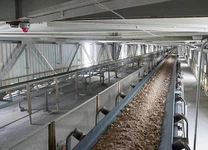
In the material transportation of industries such as mining, coal, and building materials, the high transportation costs are often a key factor that squeezes the profits of enterprises. If you are troubled by problems such as rapid equipment wear, excessive material waste, excessive energy consumption, and frequent maintenance, then the scientific application of the EXCT Apron Feeder will become a breakthrough for cost reduction - by optimizing the selection, standardizing operations, and conducting scientific maintenance, it is possible to significantly reduce the transportation cost by 15% to 30%.

Select The Right Apron Feeder
The selection of the Apron Feeder is the foundation for cost reduction. Choosing the right model can prevent frequent failures caused by "overloading of small machines" or energy waste due to "underloading of large machines".
 (1) Matching Material Characteristics
The core material adaptation of the Apron Feeder conveyor is for materials with a bulk density of ≤ 2.0 t/m³, such as raw coal and ores, with the maximum feed particle size reaching 1500mm.
- For large and hard materials, we choose thick plate pansand belt chains with sealing and self-lubrication devices, which can extend the service life of the chains by 20%-30% and reduce the frequency of replacement.
- For fine-grained materials, we use regular pans, but ensure that the chain plate overlap is not less than 10mm to avoid material leakage loss.
(2) Adapting To Transportation Scenarios
- Regarding installation inclination, horizontal or a maximum 16° inclined installation is possible. Inclined installation can shorten the transportation path, reduce construction costs for the site, and at the same time, we set fixed supports at the machine head and tail to prevent the equipment from sliding.
- In terms of transportation volume matching, we select the corresponding model based on the actual production capacity (200-4000t/h), and combine with variable-frequency motors (with a feeding speed of 0.01-0.26m/s that can be adjusted) to achieve precise control of the feeding speed and avoid overloading or underloading operation.
(3) Paying Attention To Core Components
- For the reducer, we prioritize modular design planetary gear reducers, which have high transmission efficiency, low noise, and gears undergo carburizing and quenching treatment, making them wear-resistant and durable, reducing maintenance downtime.
- For support rollersand rollers, we choose maintenance-free types with self-lubricating bearings, which can reduce lubrication costs and the workload of manual maintenance.
Standard Operating Procedures For Apron Feeder
Standard operation can maximize equipment efficiency, reduce material waste and energy consumption, and is a key aspect for cost reduction.
(1) Precise Control Of Feed Volume
- We maintain the thickness of the material on the chain plate to be no less than 500mm to avoid direct impact of an empty machine on the material intake, and to reduce chain plate deformation and wear. If it is unavoidable to empty the machine, a layer of crushed material should be laid on the chain plate for buffering.
- We adjust the feeding speed through the frequency control system to match the processing capacity of the downstream crusher and screening machine, avoiding the secondary transportation costs caused by material accumulation.
 (2) Standard Operating Procedures
- The distance between the discharge port and the chain plate is set to be 1.5-2 times the maximum size of the material, to ensure smooth material transportation and reduce jamming and spillage losses.
- We leave an 8-13mm gap between the guard plate and the chain plate on both sides, and the distance between the bottom edge of the guard plate and the surface of the chain plate is controlled at 5-10mm to effectively prevent material overflow.
(3) Reasonable Layout Planning
- We take advantage of the tiltable installation feature of the Apron Feeder to optimize the site layout, directly connecting the silo and the downstream equipment, reducing the intermediate transfer steps of materials, and lowering transportation energy consumption and spillage losses.
The axis line of the tensioning device is 350-500mm away from the rear wall of the silo. This design not only facilitates maintenance and disassembly but also prevents the accumulation of materials in dead corners, thus avoiding waste.
Scientific Maintenance Of Apron Feeders
The lifespan of the equipment directly affects the return on investment. Scientific maintenance can reduce downtime due to failures and lower the costs of component replacements and repairs.
(1) Establish A Regular Lubrication Mechanism
- Identify lubrication points: The focus is on the reducer, chain wheel shaft device, support rollers, and tensioning devices. Select the corresponding lubricating oil for different parts and strictly prohibit the mixed use of different brand oil products.
- Strictly follow the lubrication cycle: The reducer should be refilled with new oil 200 hours after its first operation, and the oil should be changed every six months; the chain wheel group should be lubricated every six months, and the chain wheel group in the oil tank should be lubricated once a week.
(2) Regular Inspection And Maintenance
- Daily inspection: Clean the floating coal and debris at the machine head and tail, check the tightness of bolts, the condition of the chain and chain wheel, and whether there is any damage to the electrical equipment.
- Daily inspection: Repeat the items of the daily inspection and additionally check the oil level and oil temperature of the reducer (not exceeding 80℃), as well as the tension of the chain.
- Replace wear parts regularly: When the pitch of the chain is worn more than 7mm or the elongation exceeds 0.25% of the original length, we recommend replacing it in time; when the chain plate bolts are loose, we recommend applying an anaerobic adhesive for anti-loosening and tightening according to the specified torque.
(3) Quick Handling Of Faults
- Common fault response: Chain skipping teeth are mostly caused by loose chains or worn gears, and the chains should be re-tensioned or the rollersreplaced; if the oil temperature of the reducer is too high, it may be due to excessive lubricating oil or poor heat dissipation, and the excess lubricating oil should be discharged and the heat dissipation surface should be cleaned.
- Fault handling principles: If abnormal sounds or faults occur during equipment operation, stop the machine immediately for inspection. Do not operate with faults; during maintenance, the power supply must be cut off and a maintenance sign hung to avoid safety accidents.
Scenario Adaptation Of Apron Feeders
Tailoring the application methods of equipment for different industries and environments can further enhance the cost reduction effect.
(1) Targeted Optimization For Different Industries
- Coal Industry: To adapt to the transportation of high-stone-content coal, we selected wear-resistant pansand sealed chains to reduce wear caused by dust entering the chain inside, and strengthened the explosion-proof protection of electrical equipment.
- Building Materials Industry (limestone, cement clinker): We optimized the feeding speed and inclination angle to match the production capacity of the crushing system, avoiding the decline in transportation efficiency due to material accumulation.
(2) Adaptability To Harsh Environments
- Low-temperature environment (-30℃): We selected lubricating grease and motors that are resistant to low temperatures to prevent the lubricating oil from solidifying and the motor from failing to start, ensuring continuous operation in winter.
- Dusty environment: We strengthened the equipment's sealing protection, and regularly cleaned the dust and debris on the chains and rollersto reduce wear and the risk of faults.
The cost reduction value of the EXCT heavy-duty Plate Feeder can be achieved through multi-dimensional collaboration such as "accurate selection, standardized operation, scientific maintenance, and scenario adaptation". For you, the core of cost reduction is not simply cutting down individual expenditures, but optimizing the full life cycle application of the equipment to maximize transportation efficiency and minimize costs.
By following these strategies, you can not only extend the equipment's lifespan and reduce downtime due to failures, but also reduce material loss and energy consumption, thereby creating significant benefits for the enterprise. We hope this article can help you clarify the cost reduction strategy and make the EXCT heavy-duty Apron Feeder a "money-saving tool" for your material transportation. If you need to formulate a personalized plan based on specific production scenarios, please feel free to contact us at any time.