In industries such as mining, metallurgy and building materials, the Apron Feeder serves as a crucial "bridge" that connects raw materials with processing.
The selection of this component is crucial for the overall line efficiency. If it does not match the requirements, it will directly result in insufficient production capacity, increased wear and tear, and rising maintenance costs.
This article will start from the basic understanding of the equipment, its types and structure, and gradually break down the key selection factors to help you precisely match the optimal equipment.
What Is a Apron Feeder?
Introduction And Applications
Apron Feeder is a device that uses chain plates as the conveying medium to achieve continuous short-distance short-circuit transportation and uniform feeding of large pieces and bulk materials. Its core value lies in "stable connection" - it can receive raw materials from storage bins and self-unloading trucks, and precisely supply materials to downstream equipment such as crushers and conveyors, suitable for different forms of materials such as coarse particles and fine powders.
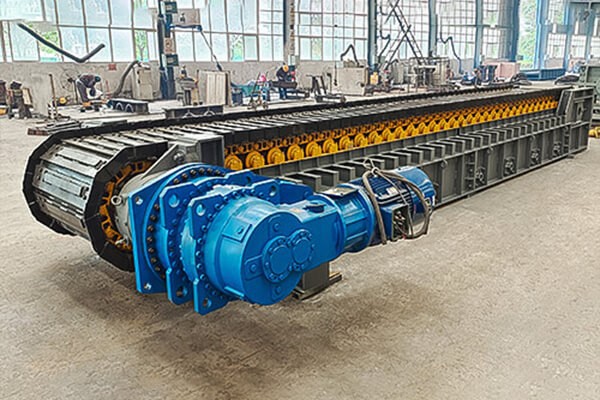
In practical applications, its presence can be found in multiple industries:
- ● Mining Sector: primary feeding of raw coal and ores in open-pit and underground mines;
- ● Construction Materials Sector: transportation of limestone and sandstone aggregates in cement production lines;
- ● Metallurgical Sector: pre-treatment feeding of coke and sintered ore in steel mills;
- ● Environmental Protection Sector: uniform feeding of construction waste and industrial waste residues before crushing.
More importantly, it can adapt to harsh working conditions: whether the particle size of the materials fluctuates greatly, is exposed to high temperatures (such as in metallurgical raw materials), high humidity (such as in wet and sticky coal), or is subject to rain, snow, or freezing environments, it can maintain stable feeding accuracy and avoid production line interruptions caused by environmental factors.
Installation Form
The installation flexibility of the Apron Feeder is one of its major advantages, and it is mainly divided into two forms:
- ● Horizontal Installation: This is the most common method, suitable for most flat production lines. It can ensure smooth material transportation and reduce problems such as material sliding and uneven loading caused by inclination;
- ● Inclined Installation: The maximum inclination angle that can be achieved is 25° It is suitable for complex terrain or limited space scenarios (such as underground mines, multi-story factories). Inclined installation not only shortens the total length of the equipment, reduces construction costs, but also adapts to production line layouts with large height differences.
How To Choose A Apron Feeder?
Comprehensive Analysis Of Material Characteristics
Material characteristics are the "first factor" determining the type of machine, material, and structural design, and require the following 5 indicators to be focused on:
► Particle Size And Density
Large particle size (>1000mm), high density (>2400kg/m³) materials (such as large pieces of iron ore): Heavy-duty plate-type feeders must be selected to ensure the equipment can withstand the impact and weight of the materials;
Medium particle size (300-800mm), medium density (1200-2400kg/m³) materials (such as limestone): Medium-sized machines can meet the requirements;
Small particle size (<300mm), low density (<1200kg/m³) materials (such as fine coal powder): Light-duty machines are more economical and energy-efficient.
► Humidity And Stickiness
Wet and sticky materials (such as wet coal with moisture content >15% and clay) are prone to adhering to the chain plates, causing blockage and leakage. When selecting, special attention should be paid:
- Prioritize models with "anti-adhesion design", such as coating the surface of the chain plates with wear-resistant materials (reducing adhesion) and installing vibrators (dusting off adhered materials);
- If the material stickiness is extremely strong, consider increasing the gap between the chain plates or installing a drip material conveyor below the equipment (collecting the leaked materials to avoid accumulation).
► Abrasion Resistance
High abrasion materials (such as quartz sand and granite particles) will accelerate the wear of the chain plates and chains. When selecting, upgrade the material:
- Chain plates use high-chromium-manganese steel (such as ZGMn13), with higher surface hardness;
- Chains adopt carburizing treatment to improve surface wear resistance;
- The surfaces of the supporting rollers and return rollers are hardened to extend service life.
► Temperature
High-temperature materials (such as sintered ore in the metallurgical industry, cement clinker, with a temperature > 200℃) require components that can withstand high temperatures:
- Chains and chain plates should be made of high-temperature-resistant steel (such as 304 stainless steel) to prevent the material's strength from decreasing under high temperatures;
- Bearings should use high-temperature lubricating grease (such as molybdenum disulfide lithium-based grease) to prevent the lubricating grease from failing under high temperatures;
- Sealing components should be made of fluororubber, which has better temperature resistance than ordinary rubber.
Precise Matching Of Production Capacity
Production capacity is the "core indicator" for selection and needs to be determined according to the following steps:
► Clarify Actual Requirements
First, calculate the "maximum material demand per hour" of the production line (unit: tons/hour). For example, if a primary crusher in a coal mine needs to process 100 tons of raw coal per hour, then the rated conveying capacity of the Apron Feeder should be slightly higher than 100 tons/hour.
► Reserve Reasonable Redundancy
It is recommended to reserve 10%-20% of production capacity redundancy when selecting the model. There are two reasons for this:
- To cope with production fluctuations: The amount of materials may fluctuate in actual production due to changes in raw material supply or downstream equipment demand. The redundant production capacity can prevent equipment from operating at full capacity for a long time;
- To offset wear and tear: After a certain period of use, the chain plates and chains may wear out, which may slightly reduce the conveying efficiency. The redundant production capacity can ensure that the demand is still met in the later stage.
► Pay Attention To The Uniformity Of Feeding
In addition to quantity, uniformity is equally important. Uneven feeding can lead to overload and blockage in downstream crushers or lead to energy loss due to idling. Therefore, it's important to select a machine with a speed control function:
- Preferable equipment should be equipped with a variable frequency motor, which can adjust the chain speed (typically 0.1-0.5 m/s) to control feed rate and adapt to different operating conditions.
- If the production line is highly automated, a machine with PLC control can be selected to achieve coordinated speed regulation with downstream equipment (e.g., when the crusher is under high load, the feeder automatically slows down).
Adapt To The Working Environment Conditions
The working environment directly affects the lifespan and stability of the equipment. It needs to be considered from three aspects: space, temperature and humidity, and dust.
► Space Conditions
- Narrow spaces (such as underground mines, factory mezzanines): Select models with segmented frames for easy transportation and installation; if inclined layout is required, confirm whether the maximum inclination angle (≤ 25°) meets the height difference requirements of the site;
- Open areas: Prefer models with horizontal installation, as the structure is simpler and maintenance is more convenient.
► Temperature And Humidity, As Well As Corrosiveness
- ① High-temperature environment (such as metallurgical workshops): Select components made of heat-resistant materials, and increase the design for heat dissipation of the equipment;
- ② High humidity / corrosive environment (such as coastal building materials factories, chemical workshops): Chain plates and frames undergo anti-corrosion treatment (such as hot-dip galvanizing, spraying anti-corrosion paint), bearings and seals use corrosion-resistant materials (such as stainless steel, fluororubber);
- ③ Rain and snow open-air environment: Install rain shields, design drainage at the bottom of the equipment to prevent rainwater from entering the bearings and motors and causing malfunctions.
► Dust Concentration
In high-dust environments (such as coal mines, cement plants), strengthen sealing and dust removal:
- Install sealing skirt plates at the connection points between the equipment and the silos, downstream equipment to reduce dust leakage;
- If the dust concentration is extremely high, a dust removal system (such as pulse bag-type dust collector) can be combined, and dust-proof covers can be added to key components such as bearings and motors to prevent dust from invading and accelerating wear.
Optimize Equipment Configuration Selection
After the basic model is determined, the configuration needs to be optimized according to the requirements. The following 5 configuration items should be given special attention:
► Drive System
- ① Motor: Preferentially select a motor with protection grade IP55 and insulation grade F, which can adapt to dusty and humid environments, and can operate stably even when the voltage fluctuates by ±10% and the frequency fluctuates by ±5%;
- ② Reducer: Select a hard toothed reducer (efficiency ≥ 97), with gear precision reaching DIN6 level or above, and bearings using imported brands such as SKF and NSK, with a service life of over 30,000 hours.
► Material Of Conveying Plate (Chain Plate)
- ① For ordinary materials: Q235 steel plate is sufficient;
- ② For highly abrasive materials: ZGMn13 manganese steel;
- ③ For high-temperature / corrosive materials: 304/316 stainless steel.
► Adjustment Mechanism
- ① Feeding quantity adjustment: Select a variable frequency speed control mechanism to achieve stepless speed adjustment;
- ② Chain tension adjustment: Select an electric tensioning device (instead of manual), which can be remotely controlled and reduces the workload of manual maintenance.
► Safety Protection
In addition to the basic emergency stop rope and zero-speed switch, the following can also be added as per requirements:
- ① Overload protection: When the equipment gets stuck, the power supply of the motor will be automatically cut off to prevent the motor from burning out;
- ② Chain plate deviation detection: If the chain plate deviates, an alarm will be triggered immediately and the machine will stop, preventing the chain plate from wearing out and the frame from deforming.
► Intelligent Control
If the production line aims for automated management, a model with integrated PLC control system can be selected to achieve:
- ① Remote monitoring: The parameters such as the rotational speed, current, and temperature of the equipment can be viewed through the upper computer;
- ② Automatic alarm: When the equipment malfunctions, an alarm message will be automatically pushed to the mobile phone or computer;
- Interconnected control: It can be linked with the feeder, crusher, and other equipment to achieve "on-demand feeding".
Considering After-Sales Service Guarantee
The Apron Feeder is a heavy-duty equipment. Its later maintenance and spare parts supply are of vital importance. When selecting the model, it is necessary to evaluate the "service capability" of the supplier and focus on the following points:
► Technical Support
Confirm whether the supplier can provide:
- Installation Guidance: Technical personnel will be dispatched to provide on-site installation guidance to prevent equipment problems caused by improper installation;
- Operation Training: Training will be provided to operators and maintenance personnel to ensure proper use and maintenance of the equipment;
- Fault Diagnosis: Remote fault diagnosis services will be provided to quickly locate problems through video and data monitoring.
► Accessories Supply
Inquire about the inventory and lead times of core components (such as chains, chain plates, bearings, and reducers):
- Common components must be in stock to avoid prolonged equipment downtime due to shortages;
- Special components (such as custom chain plates) must have a production lead time of ≤30 days to ensure rapid equipment recovery.
► Warranty Period
Give priority to suppliers with long warranty periods (such as a 1-year warranty for the host and a 2-year warranty for core components), and at the same time confirm the scope of the warranty (whether it includes installation and commissioning, and parts replacement) to reduce subsequent maintenance costs.
Types Of Apron Feeder
Based on the conveying capacity and structural strength, Apron Feeder are mainly divided into three types: heavy-duty, medium-duty, and light-duty. Different types have significant differences in applicable scenarios, and when selecting, it is necessary to first clearly identify the "load level" to which your requirements belong.

◎ Heavy-Duty Apron Feeder
The heavy-duty Apron Feeder is a "heavy-duty player", specially designed for handling large-grained, high-density, and high-impact materials. Its core feature is "robustness and durability".
The key parameters and applicable scenarios are as follows:
- Material compatibility: It can handle the largest particle size of 1800mm for heavy and hard bulk materials (such as large pieces of iron ore and raw coal blocks), and can withstand high material column pressure and the impact of material falling;
- Typical applications: It is installed at the bottom of the raw material storage bin or below the dump truck bin, directly receiving raw materials and transporting them to the primary crusher, serving as the "first checkpoint" of the production line in large mines and metallurgical plants;
- Structural advantages: The body is welded with thick steel plates, the chain plate and chain are made of high-strength wear-resistant materials, the bearings and drive system are designed according to heavy-duty standards, and they can withstand the wear and impact of materials for a long time, with a long average trouble-free operation time.
◎ Medium-Duty Apron Feeder
The medium-Duty Apron Feeder is a versatile device, balancing both conveying capacity and application scope, suitable for most medium-load production lines.
Its key parameters and applicable scenarios are as follows:
- Material compatibility: It can convey bulk or granular materials with a density of ≤ 2400 kg/m³, a single piece weight of ≤ 500 kg, and a particle size of 300-400 mm (such as limestone, cement clinker);
- Typical applications: Widely used in building material factories and small and medium-sized mines for auxiliary processes, evenly distributing materials from the storage silo to the crusher and conveyor, ensuring the stability of downstream equipment while avoiding cost waste due to excessive design;
- Usage precautions: It is necessary to avoid the full pressure of the material column directly acting on the chain plate - if the silo design is unreasonable, long-term full silo pressure may cause the chain plate to deform and the chain to break, so it is usually necessary to combine with silo gate control of the material level.
◎ Light-Duty Apron Feeder
The Light-Duty Apron Feeder is a "precise performer", specifically designed for light loads and small particle sizes, highlighting the features of "flexibility and energy efficiency".
The key parameters and applicable scenarios are as follows:
- Material Adaptability: Suitable for conveying loose materials with a bulk density of ≤1200kg/m³ and a single piece weight of ≤140kg (typically with a particle size of <160mm) (such as chemical particles, by-products of grain processing, and fine materials from small building materials);
- Typical Applications: Used in fine feeding scenarios, such as transporting raw materials from small silos to mixers, packaging machines, or processing fine particle waste in environmental equipment;
- Equipment Features: Compact structure, small floor space, low motor power (energy consumption is 30%-50% lower than that of medium-sized and heavy-duty models), simple installation and maintenance, suitable for small enterprises or low-load production lines.
Core Components Of Apron Feeder
The performance and lifespan of the Apron Feeder are largely determined by the design and material of the core components. Understanding the functions of the key components can help you determine the "durability" and "compatibility" of the equipment when making a selection.
Drive Device
Drive device utilizes an AC variable frequency drive system that integrates software with electronic and mechanical systems to provide precise conveyor speed control and overload protection.
The main components of the drive device can choose Siemens, ABB, Sew, Flender and other well-known domestic and foreign brands of motor and gearbox, to provide stable and continuous kinetic energy output, with high efficiency, low noise, low vibration and other characteristics.
Head Shaft Assembly
The head shaft assembly is the key component for driving the chain plate to operate. It is composed of segmented sprockets, hubs, and durable bearings:
- The sprockets are made of high-strength steel and are designed in a segmented manner, which facilitates transportation and replacement. Even if there is local wear, the entire assembly does not need to be replaced;
- The bearings are equipped with end oiling ports, allowing for regular replenishment of lubricating grease. At the same time, a sealed structure is adopted to prevent dust and material particles from entering, thereby extending the service life of the bearings;
- The stop blocks welded on the frame can limit the displacement of the head shaft, ensuring the stability of operation under heavy-load conditions and avoiding component misalignment caused by vibration.
Main Frame
The main frame is made of welded steel sections in an I-shaped structure. It serves as the foundation for carrying materials and all components. Its design has two key features:
- Segmented Structure:The frame of the large Apron Feeder is manufactured in multiple sections and assembled on-site. This design not only facilitates transportation (especially suitable for narrow passages such as mines and tunnels), but also reduces installation difficulty;
- High-Strength Material:It uses low-alloy high-strength steels such as Q355, which can withstand the impact of materials and its own weight. It is unlikely to deform over a long period of use, ensuring the stability of equipment operation.
Chains And Chain Plates
Chains and chain plates are the components that come into direct contact with the materials. Their material and structure determine the wear resistance and lifespan of the equipment:
- Chains:Use special chains for bulldozers (common models include FL4, D4, D7, D9, etc.). These chains have high tensile strength and are wearresistant, with a safety factor of over 5 times. They are suitable for long-term continuous operation;
- Chain Plates (Cast Scrapers):Chains of D4 and above specifications are compatible with manganese steel cast scrapers. The surface hardness reaches HRC50 or above, capable of withstanding the wear of the materials; The edge of the scraper is designed with an anti-leak flange, which can reduce the leakage of fine materials from the gap, and a wear-resistant pad is added at the bottom to reduce the friction loss with the supporting rollers.
Support Rollers And Return Rollers
Both are designed with "lifelong lubrication" feature. Before leaving the factory, they are filled with lubricating grease and sealed. No frequent maintenance is required during use. The support rollers are densely arranged near the hopper to prevent the chain plate from sagging under the weight of the materials. The return rollers support the returning chain plate and reduce running resistance;
Tail Tension Device
The tension device is used to tighten and adjust the horizontal position of the chain to ensure that the chain tightness is moderate and make it run smoothly.
When the pans are suddenly impacted by the material, the composite spring can play a buffer role to protect the pans and other components from damage.
Lubrication System
Only the head shaft requires regular lubrication. The equipment is reserved with a centralized lubrication pipeline that can be connected to an automatic lubrication pump to achieve timed and quantified oil supply, reducing the workload of manual maintenance;
Safety Devices
The standard configuration includes an emergency stop pull cord (arranged along the length of the equipment) switch. In case of any malfunction such as jamming or chain breakage of the equipment, it can quickly stop the machine, ensuring the safety of operators and the equipment.
Selection of Apron Feeder
The final selection can be summarized into three steps to ensure precise alignment with the requirements at each stage:
- ► Clarify Requirements: First, determine the material characteristics (particle size, density, moisture content), production capacity (hourly volume + redundancy), and working environment (space, temperature and humidity, dust). These are the "basic data" for the selection;
- ► Preliminary Matching: Based on the requirements, select the machine type (heavy-duty / medium-duty / light-duty), core material (ordinary steel / manganese steel / stainless steel), and key configurations (variable frequency speed control, automatic lubrication);
- ►Verify And Optimize: Communicate with the supplier, provide detailed demand data, have the supplier prepare the selection plan (including equipment parameters, production capacity calculation, configuration list), and simultaneously verify the after-sales service capability. Finally, determine the optimal solution.
Selecting the appropriate Apron Feeder is a systematic technical decision-making process. We recommend that you have in-depth communication with professional Apron Feeder manufacturers like us who have extensive experience. Our technical team can provide you with free consultation on selection and analysis of working conditions, ensuring that the equipment you invest in not only integrates perfectly into the current production line but also leaves room for future expansion needs.
Contact our experts immediately to obtain a free personalized selection plan and quotation!