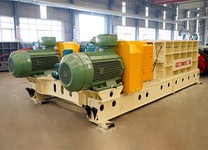
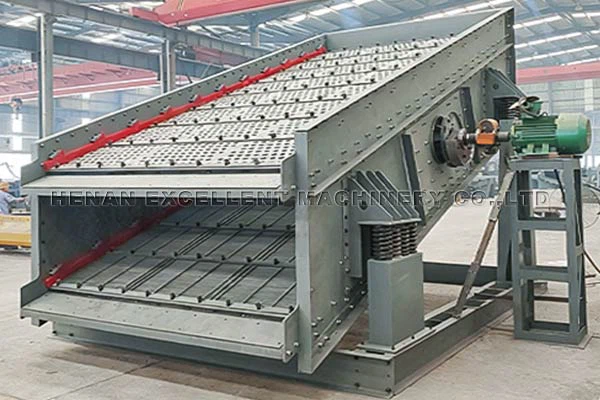
TheInclined Screen, as a common screening equipment in industrial production, is widely used in industries such as mining, coal, metallurgy, building materials, and chemical engineering. It is the core equipment for material classification, dehydration, and desilting.
However, during actual use, the clogging of the screen plate is a common and troublesome problem. Traditional woven screen plates are prone to sticking, clogging, and material blockage when working under conditions of damp, sticky, and muddy materials, and they have poor self-cleaning ability. Therefore, they have to be frequently stopped for cleaning, which reduces the screening efficiency of the entire production line. So, how can we effectively solve the problem of incline screen screen plate clogging?
Real Customer Feedback
Our German customer has a quarry in Indonesia and purchased two sets of our large inclined screen equipment in 2025. Before purchasing our equipment, they had been facing the same screening problems for a long time:
- Processing wet and sticky materialson-site, using manganese steel wire woven screen all the time;
- The materials were easily adhered to the screen plate, causing large areas to be blocked, and the effective screening area rapidly decreased;
- The self-cleaning abilityof the woven screen was extremely weak. Vibration alone could not clear the blockage, and it had to be manually cleaned;
- The equipment was shut down multiple times every day, resulting in intermittent production, and the screen plate wore out quickly and needed frequent replacements.
After switching to the recommended Inclined Screen combined with polyurethane screen plates, the on-site effect was immediately noticeable:
- The hole-blocking rate of the screen plates was reduced by 70%compared to the original woven screens;
- The phenomenon of screen plate sticking and material blockage was significantly reduced;
- The continuous operation time was extended, and the production efficiency was significantly improved;
- The frequency of machine shutdown for cleaning was decreased, and the maintenance costs and labor costs decreased simultaneously.
►The effect comparison is shown in the video below:
Why Is a Woven Screen Particularly Prone To Clogging?
The reason why a woven screen is prone to clogging is not due to improper use, but rather an inherent defect in its structure and material:
The metal material is rigid and lacks elasticity, lacking self-cleaning ability. Once the material gets stuck, it is difficult to be removed; at the same time, the surface is rough and the friction coefficient is high, easily adsorbing damp or viscous materials, resulting in clogged screens and bridging; moreover, the uniform diameter hole design lacks space for accommodation, and once particles, fibers, and lumps enter the sieve holes, they are very likely to get stuck, eventually leading to the phenomenon of getting worse and worse with use and a continuous decline in efficiency.

-
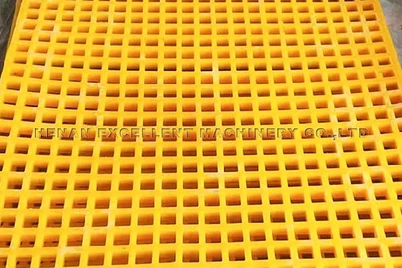
Advantages Of Polyurethane Screen Plate
High elasticity
The elastic deformation capacity of polyurethane screen plates can effectively absorb the impact of materials and reduce the clogging of fine particle materials. When materials pass through the screen surface, the screen plate will produce slight vibrations, making it easier for the materials to pass through. In coal classification screens, after using polyurethane screen plates, the effective screen plate screening rate increased by approximately 15%, and the production efficiency was significantly improved.
- High wear resistance
The Shore hardness of polyurethane materials usually ranges from 80A to 95A, featuring excellent anti-wear performance. Compared to metal screen plates, its service life can be extended by 3 to 5 times, and it is particularly suitable for mineral screening scenarios with sharp particles.
- High screening efficiency
The polyurethane screen plate has excellent water permeability and large-angle sieve holes (140°), which can effectively prevent the adhesion of damp fine particles, thereby improving the screening efficiency. Its self-cleaning property ensures that the sieve holes do not get clogged, further enhancing the screening efficiency.
- Broadly applicable
Polyurethane screen plates are not only suitable for the screening of dry materials, but also for the screening of damp fine particles. The imported raw materials ensure that the screen plates can effectively avoid clogging even under dynamic conditions, enabling polyurethane screen plates to perform outstandingly in various industrial environments.
The polyurethane screen plate used in the inclined screen has comprehensive properties such as wear resistance, elasticity, and corrosion resistance, which have enabled efficient screening in industries like mining, construction materials, and chemical engineering. By appropriately selecting the mesh size and structure of the screen plate, the screening effect can be further optimized. For screening equipment that needs to operate stably for a long time, the polyurethane screen plate is a reliable choice for improving production efficiency and reducing costs.
If you have any questions regarding the selection of Inclined Screen polyurethane screen plate, anti-blocking solutions, or the compatibility with working conditions, or if you need to customize an efficient screening solution based on your own material humidity, particle size, and production capacity requirements, please feel free to contact us at any time. We have a professional technical team that can provide one-on-one consulting services, precisely match the screen plate specifications, answer questions related to equipment operation and maintenance, and help you reduce blockages, lower investment costs, and improve screening efficiency.