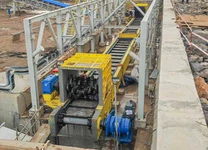
In the material screening process of industries such as coal, mining, and power, the selection of equipment directly affects production efficiency, operation and maintenance costs, and the utilization of the site. Currently, in the market, roller screens and High-Frequency Screen (also known as high-width probability screens) are two mainstream screening equipment, but they have significant differences in structural design and performance. This article will comprehensively compare the advantages and disadvantages of the two from six core dimensions: screening efficiency, reliability, compatibility, discharge particle size, abnormal response, and environmental protection, using specific data and cases. This will provide professional reference for your company's equipment selection.
Why Focus On Roller Screens And High-Frequency Screen?
As industrial production demands for sieve separation accuracy, efficiency and stability increase, the types of sieve separation equipment have been continuously updated, from traditional vibrating screens to new roller screens and High-Frequency Screen, forming diversified selection schemes.
Among them, Roller Screens are centered on the "moving sieve holes" design, emphasizing high efficiency, anti-blocking, durability and low energy consumption; High-Frequency Screen rely on the vibration principle and achieve material stratification through high-frequency and high-width movements. Although both types of equipment are used for the separation of medium and fine particles (such as coal classification and mineral impurity removal), they differ significantly in aspects such as wet and sticky material handling, long-term operation costs, and site adaptability, becoming key comparison objects for enterprises when making selection decisions.

► Screening Efficiency
Screening efficiency is the primary indicator for evaluating the core performance of the equipment, directly determining the accuracy of material classification and the smoothness of subsequent processes. The difference in efficiency between roller screens and wide-surface screens stems from the disparity in the "movement state of the screen holes".
Roller Screen
The roller screen adopts the "moving sieve slot" structure - the four sides (i.e., the discs of adjacent rollers) forming the sieve slots have relative motion, creating a screening effect similar to "hand rubbing". This design brings two major advantages:
- Strong Anti-Sticking And Blocking Ability:The moving sieve slot walls can effectively break the surface tension of wet coal, preventing the materials from adhering to the edges of the sieve slots, ensuring that the sieve slots remain unobstructed at all times;
- Good Stratification Effect: The rotation of the rollers causes the materials to roll and rub, promoting the dispersion of coal particles and preventing agglomeration. Fine particles can quickly pass through the sieve.
Actual application data shows that the screening efficiency of the roller screen remains above 90%, even when processing wet and sticky coal with a moisture content of over 15%, it can still maintain efficient screening without the need for manual cleaning of the sieve slots.
High-Frequency Screen
The High-Frequency Screen is a vibrating type of equipment and adopts a "static screen hole" design - the screen bars forming the screen holes remain stationary, relying solely on the high-frequency vibration of the screen frame to achieve material screening. This structure has obvious shortcomings when processing wet and sticky materials:
- Easy to Block Holes: The surface tension of wet coal is high, and it is very likely to adhere to the stationary screen bars, causing the screen holes to become blocked. Especially when the moisture content of the material exceeds 8%, the blockage rate can reach over 70%;
- Difficult to Separate Layers: Under the vibration effect, the wet coal particles are prone to agglomerate into blocks, unable to be effectively dispersed. Fine-grained materials are difficult to pass through the screen, and the screening efficiency significantly decreases.
In actual operation, the screening efficiency of the High-Frequency Screen is usually between 0-40%, and after blockage, manual screening is required, which not only consumes manpower but also causes the production line to stop, affecting the overall efficiency.
► Reliability
The reliability of the equipment directly affects the operation and maintenance costs as well as the production continuity. The roller screen and the High-Frequency Screen have significant differences in the lifespan of wear parts and the period of trouble-free operation. This is specifically manifested in the following aspects.
Roller Screen
The core wear-prone component of the roller screen is the "screen plate", which is made by casting a wear-resistant manganese-chromium alloy steel. The surface hardness reaches above HRC55, enabling it to withstand long-term impact and wear from the materials. The actual service life performance is excellent:
- Screen Plate Lifespan: Under normal operating conditions, the lifespan of the screen plate can reach more than 2 years. In some user cases, the screen plate has been continuously used for 5 years without replacement;
- Fault-Free Period: The overall fault-free maintenance period of the roller screen has been increased from the traditional screening equipment's "half a year to one year" to 3 years or even longer. Its reliability is comparable to that of belt conveyors, converting wear-prone components into durable ones;
- Operational Advantages: The design of the screen shaft is universal, allowing for interchangeability at the front and back. During maintenance, no complex tools are required, significantly reducing labor and equipment costs, laying the foundation for the intelligent operation of the coal conveying system.
High-Frequency Screen
The core wear parts of the High-Frequency Screen are "screen mesh (screen bars)", which are affected by vibration, impact and material wear, resulting in a shorter lifespan:
- Screen Mesh Lifespan: Under normal operating conditions, the lifespan of the screen mesh is only 0.5 - 6 months, and the longest does not exceed 8 months. It is less than 1/3 of the lifespan of the screen plates of the roller screen;
- Faults And Hazards: The screen bars are prone to breakage under high-frequency vibration and require regular inspection and replacement; otherwise, the sieve holes will become larger, affecting the screening accuracy;
- Maintenance Cost: Frequent replacement of the screen mesh not only increases the cost of spare parts procurement, but also requires frequent shutdown for maintenance. The annual maintenance frequency is more than 5 times that of the roller screen, seriously affecting the continuity of production.
► Compatibility
Equipment compatibility involves factors such as floor area, building load capacity, and process complexity, which directly affect the project's infrastructure costs and site utilization rate. Taking "a processing capacity of 1000t/h and a screening particle size of 8mm" as an example, the compatibility performance of the two types of equipment shows significant differences.
Roller Screen
The structure of the Roller Screen is compact, with low requirements for the site. The specific parameters and advantages are as follows:
- Floor Space: Length × Width × Height = 7m × 778m × 3.20m, overall small volume;
- Installation Flexibility: It can be installed at the original foundation position without changing the foundation and building structure of the site, reducing infrastructure renovation costs;
- Load Advantage: It is a static load equipment, the load transferred to the building is small, and there is no need to conduct bearing verification on the original building;
- Process Simplicity: The discharge directly connects to the downstream equipment, no additional belt conveyor needs to be added, simplifying the production process.
High-Frequency Screen
The High-Frequency Screen has a large footprint and high load capacity, and the equipment configuration is complex:
- Floor Area: Length × Width × Height = 17m × 257m × 5.67m. It occupies more space than the roller screen, with an additional "length of 10m, width of 0.894m, and height of 2.47m", equivalent to a small "coal screening building";
- Process Complexity: An additional belt conveyor is required for the discharge to connect with downstream equipment, increasing the equipment procurement and installation costs;
- Load Risk: It is a dynamic load equipment. Even if the net weight of the equipment is less than that of the roller screen, the dynamic load transmitted to the building is still more than 5 times that of the roller screen. The original building must undergo bearing capacity verification. If the bearing capacity is insufficient, reinforcement and renovation are required, increasing the infrastructure cost.
► Discharge Particle Size
The uniformity of discharge particle size directly affects the quality and efficiency of subsequent processes (such as crushing and washing). The roller screen and the High-Frequency Screen perform differently in terms of the stability of screening accuracy.
The mesh of the roller screen is formed by the gaps between adjacent roller discs. The spacing between the discs remains constant during production and will not change due to vibration or wear:
Stable Accuracy: The particle size of the materials screened is uniform, with a qualified rate of over 98%, fully meeting the particle size requirements of the subsequent processes;
No "Large Material Leakage" Risk: The rotational movement of the discs can effectively prevent large pieces of material from entering, avoiding the inclusion of materials exceeding the screening particle size in the screened products.

High-Frequency Screen

The screen holes of the high-frequency screen are determined by the spacing of the screen bars. However, under high-frequency vibration and material impact, the screen bars are likely to loosen, deform, or even break:
Accuracy Fluctuation: After the spacing of the screen bars increases, it will result in "leaking large materials" - materials larger than the screening particle size will mix into the products below the screen, and the particle size qualification rate will drop to below 80%;
Quality Hazard: The unqualified materials below the screen will increase the load of subsequent crushing equipment, and even cause blockages in downstream equipment, affecting the continuity of production.
► Exceptional Response And Environmental Compliance
In actual production, equipment malfunctions and compliance with environmental regulations are the key concerns for enterprises. The performance of roller screens and wide-spreading screens also shows a disparity in these two aspects.
Exceptional Response
When an abnormal shutdown occurs in the production line (such as power failure, failure of upstream equipment), the recovery operation methods for the two types of equipment are different:
- Roller Screen: After the machine stops, the material on the screen surface does not require manual cleaning. Once the power is restored, it can directly start under load. The equipment will automatically transport the material on the screen surface to the downstream through the rotation of the rollers, and it can return to normal operation within 5 minutes;
- High-Frequency Screen: After the machine stops, the material on the screen surface is prone to being compressed and agglomerated due to vibration. It must be manually cleaned before it can be started. One cleaning operation takes 1-2 hours, which seriously affects the efficiency of production recovery, and it cannot start under load. Otherwise, it will cause the motor to overload and be damaged.
Environmental Friendliness
Compliance with environmental protection regulations is a fundamental requirement for current industrial production. There is a significant difference in dust control performance between the two types of equipment:
- Roller Screen: It adopts a fully sealed structure, with the screening process taking place in a sealed chamber, without any dust leakage outside, and no additional dust removal equipment is required, meeting environmental emission standards;
- High-Frequency Screen: The dynamic and static combination area of the screen frame and the body is difficult to achieve complete sealing, and the sealing ring is prone to fatigue damage under high-frequency vibration, resulting in dust leakage through the gaps:
- 1. Severe Dust Emission: The dust concentration in the working area can reach over 10mg/m³, far exceeding the national standard (8mg/m³);
- 2. Additional Investment Required: A pulse dust removal device must be added to meet environmental requirements, increasing equipment procurement and operation costs (the annual operating cost of the dust removal equipment is approximately 50,000 yuan).
Core Selection Conclusion
- Preferred Scenarios For Roller Screen:handling wet and sticky materials (such as wet coal, coal sludge), aiming for high screening efficiency and long-term stable operation, with limited space or the need to utilize existing infrastructure, and projects with strict environmental requirements (such as power plant coal conveying systems, large-scale coal processing plants);
- Slightly Cautious Scenarios For High-Frequency Screen :only handling dry, non-sticky small pieces of materials, and with sufficient space, high infrastructure budget, and lower maintenance frequency and environmental requirements for small-scale projects.
In summary, the Roller Screen, with its comprehensive advantages of "high efficiency, durability, compactness, and environmental friendliness", has become the mainstream screening equipment, especially in scenarios for handling wet and sticky materials and intelligent production, which can help enterprises reduce costs, increase efficiency, and enhance competitiveness.