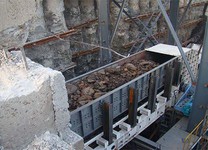
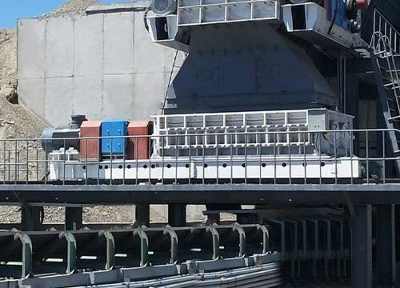
As the production capacity of mining, sandstone, and coal projects continues to expand, many projects require the layout of conveying lines across valleys and slopes. When planning the scheme, you often encounter a problem: long conveying distances, high hourly throughput, and the need to avoid residential areas, ecological red lines, and cultural relics protection zones.
Solutions such as vehicle transfer, scraper conveyors, and bucket elevators each have their limitations, making it difficult to simultaneously meet the requirements for long-distance and high-capacity continuous conveying. This is why in the field of bulk material conveying, long-distance belt conveyors have always been the preferred choice for such conditions.
This article explains the underlying logic of Belt Conveyors' suitability for long-distance and high-capacity scenarios from the perspectives of equipment principles, condition adaptation, core design, and safety control, and clarifies the technical risks that are often overlooked during selection.

Belt Conveyor Working Principle
Long-distance belt conveyors, also known as Trough Belt Conveyors, rely on the conveyor belt to simultaneously perform the functions of traction and carrying, achieving uninterrupted continuous material feeding.
The entire system mainly consists of conveyor belts, drive units, drive pulleys, bend pulleys, idler groups, tensioning devices, and frames. It is also equipped with braking, protection, and monitoring systems.
It has a compact structure, strong continuous operation capability, large conveying capacity, low unit energy consumption, and simple daily maintenance. It can also operate stably in humid, dusty mining, sandstone, and other sites, making it the mainstream equipment for continuous bulk material conveying.
In the mining, sandstone, coal, thermal power, metallurgy, and construction industries, belt conveyors are widely used wherever there is the transfer of ore, aggregate, and raw coal.
Belt Conveyors Advantages
When comparing various conveying schemes, you can intuitively see the unique value of belt conveyors in long-distance and high-capacity scenarios.
Continuous Conveying
Belt conveyors are continuous conveying equipment, without intermittent loading and unloading waiting times. As long as the upstream supply is stable, it can continuously transfer materials, matching the large-scale production rhythm of large mines and sandstone plants.
 Lower Unit Conveying Energy Consumption
Compared with vehicle short-distance transportation and intermittent conveying equipment, belt conveyors have lower energy consumption per ton of material conveyed. The longer the project cycle and the larger the throughput, the more obvious the long-term electricity cost advantage.
Strong Terrain Adaptability
Long-distance conveying lines often need to cross undulating terrain, including uphill and downhill sections, and some lines may require planar turns. You can layout the belt conveyor lines based on the terrain, avoiding sensitive areas, reducing land acquisition and earthwork excavation, and lowering the initial engineering investment.
Easy Maintenance
The components of Mining Belt Conveyors have a high degree of standardization, and idlers, rollers, and conveyor belts are convenient for inspection and replacement. Many conveyor lines in mining areas are in the wild and are convenient for daily inspections, making them suitable for long-term uninterrupted operation.
Flexible Layout Options
You can choose overhead laying, ground along the roadbed laying, etc. Narrow conveying lines do not occupy a large area of land, making them suitable for long-distance point-to-point material transportation.
Design Points for Long-Distance Belt Conveyors
Long-distance and high-capacity scenarios cannot directly apply the design ideas of ordinary short belt conveyors. Each parameter will directly affect whether the entire system can be stably put into operation.
Matching Of Basic Parameters
During the scheme design stage, you need to first confirm the core parameters of the entire system. Capacity is the foundation, directly determining how much production capacity the equipment can handle. It needs to be calculated based on the actual requirements of the project.
Bandwidth and speed work together. Bandwidth determines the cross-section for material transportation, while speed affects the conveying efficiency and the overall power of the machine. It is not necessarily the faster the speed, the better. An excessively high speed will accelerate belt wear, dust generation and impact.
Material characteristics cannot be ignored either. Loose density, angle of repose, size of the pieces, humidity, wear resistance, and stickiness all affect the selection of belts, idlers, and cleaning devices.
Line parameters include the total length of the conveyor, inclination angle, lifting height, and dimensions of straight and curved sections. These data determine the belt tension and the layout of the frame, and are the basis for the planning of the entire line.
Conveyor Belt
The conveyor belt is the core component of a belt conveyor, and its strength, wear resistance, and corrosion resistance directly determine the lifespan of the entire machine. For long-distance and high-capacity projects, steel wire rope core conveyor belts are mostly preferred. They have high tensile strength and can withstand greater tension, are suitable for long-distance transportation, and, in combination with a wear-resistant coating, can resist the wear of minerals.
When selecting, you need to consider the wear resistance of the materials, the humidity of the site, and the corrosive environment comprehensively, and not just focus on the tensile strength.
Drive System
Long-distance and high-capacity belt conveyors require sufficient and stable power output. Most of these types of machines adopt a multi-motor combined drive solution, combined with frequency conversion or CST controllable speed regulation devices.
The value of controllable drive lies in achieving soft start, smooth speed regulation, and controllable braking. It can reduce the impact at the start, prevent the conveyor belt from slipping, reduce the dynamic tension of the belt, and improve the stability of the entire conveying system.
Tensioning Device
During the operation of the conveyor belt, elastic elongation may occur. The function of the tensioning device is to continuously maintain the appropriate tension of the belt to prevent it from slackening and slipping.
The longer the conveying distance and the greater the transportation volume, the higher the requirements for the stroke and response capability of the tensioning device. You need to select the corresponding tensioning form based on the calculated results of the overall tension of the machine.
How to Select the Type of Belt Conveyor?
Applicable Scenarios
- The materials are mainly composed of loose materials such as sand and gravel, and the transportation distance is long with a high hourly transportation volume.
- The route has significant undulations and needs to avoid residential areas and protected zones. To reduce excavation and land acquisition costs, it is necessary.
- The project requires long-term continuous and stable production and values the controllable long-term operation and maintenance costs.
If the materials are extremely fine, have extremely high dust-proof requirements, or the conveying distance is short and the transportation volume is small, or the materials are sharp and prone to cutting the belt, you need to carefully evaluate and compare with other conveying equipment.
In simple terms, the core logic of selection: first calculate the route, materials, and production capacity, then match the drive, belt, braking, and tensioning entire system, rather than simply choosing the bandwidth.
EXCT's Long-distance And Large-volume Belt Conveyor is a non-standard customized equipment. The curve of the route, the up and down slope, and the material characteristics will all change the design result of the entire system.
If you are planning a long-distance and large-volume bulk material conveying project, and have requirements for belt conveyor route layout, parameter calculation, and scheme comparison, please feel free to contact us at any time. You can provide information such as material characteristics, conveying distance, transportation volume, and slope. Our engineers will combine the on-site conditions to customize an appropriate belt conveying solution for you for free, and at the same time help you assess the route risks and optimize the design to reduce the construction and later operation and maintenance costs. We look forward to communicating with you and jointly solving the problems of bulk material conveying!