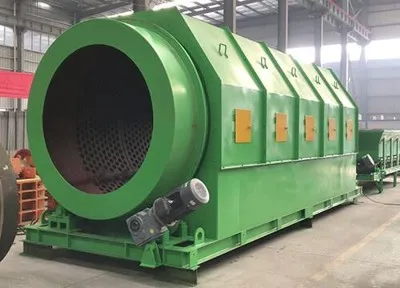
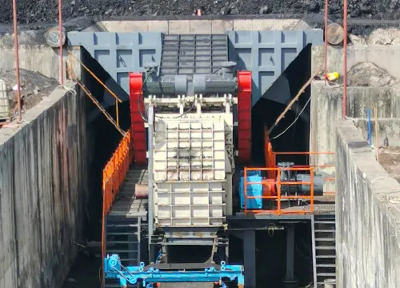
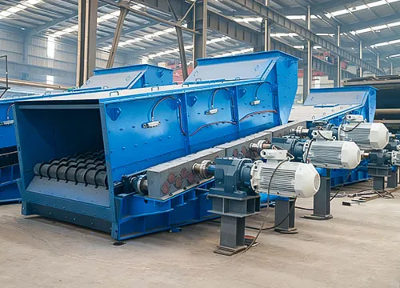
The Coal Mining Mineral Sizer is a new type of crushing equipment, featuring its unique double-disk roller design, which demonstrates its outstanding crushing performance. This machine ingeniously integrates power and mechanical principles, and through two rows of staggered-mounted wear-resistant alloy roller disks, it achieves efficient crushing operations for various ores, rocks, and construction waste. It is widely applicable in industries such as mining, metallurgy, chemical engineering, and coal mines for the coarse and medium crushing of blocky materials.

Coal Mining Mineral Sizer Operation
Preparation Before Use
Before starting the operation, the operator should read the duty log and conduct a comprehensive inspection of the equipment, checking the tightness of the bolts at all connection points. Check if there is any material in the feeding hopper; if so, it should be cleared in time. Check the oil level of the reducer and the lubrication condition of the bearings to ensure an adequate supply of oil.
Safety And Safety Protection Before And During Use, Safety Signs And Instructions
Before and during use, all covers must not be removed at will. All rotating parts must be equipped with protective devices. Safety warning signs should be hung in accessible areas, with the words "Danger" written on them and they should not be approached.
Operating Procedures, Methods, Precautions, Common Erroneous Operations And Preventive Measures During Startup And Operation
- Before the initial startup, a comprehensive inspection of the Coal Mining Mineral Sizer should be conducted: Tighten all bolts, replenish the lubricating oil for the reducer, the lubricating grease for the gear box and the main bearing, check for loose electrical control wiring, and clear out the remaining materials in the crushing chamber; after no abnormalities are found, perform a test run with a single start, confirm the correct direction of rotation, and then start the machine officially.
- No matter how the feed is supplied to the mineral sizer, the feeding must be uniform, and a reliable magnetic separator device should be installed to remove iron, wood and other impurities. It is strictly prohibited for iron, wood and other impurities to enter the mineral sizer to prevent accidents.
- If abnormal noises are detected during operation of the mineral sizer, or if the transmission unit, oil, or any other components show abnormal temperature rise or emit odors, the machine should be stopped immediately. The cause should be identified and the fault eliminated before it can be restarted.
- The electrical control box is designed to be dustproof and waterproof, and the wiring is regularly tightened. After closing the switch, the PLC is switched to the operation mode. According to the needs, centralized or local control can be selected. In the local mode, the forward button can be pressed to start. The stop button has self-locking function. After stopping, it needs to be manually reset before it can be restarted again. The detailed electrical control instructions can be found in the original factory electrical manual.
Monitoring And Recording During Operation
Monitoring and recording data such as the current, voltage, discharge particle size, and processing capacity of the electric motor.
Shutdown Procedure
The normal shutdown procedure is to stop the feeding first. Only after the materials in the crushing chamber have been completely discharged can the machine be shut down. Except in special circumstances, it is not allowed to start under load.
►Daily maintenance
Under normal circumstances, before the coal mining mineral sizer leaves the factory, there is a small amount of lubricating oil in the reducer. It needs to be replaced. Users should add the specified brand and quantity of lubricating oil according to the requirements of the reducer manual. After the first 15 days of operation, the oil tank needs to be cleaned and new oil should be replaced. From then on, the oil in the reducer can be completely replaced every 3 to 6 months depending on the situation.
The components that require lubrication in the coal mining mineral sizer include the main bearing of the Mineral Sizer, the motor bearing, the reducer, the coupling, the synchronous gear, the hydraulic coupling, etc. (as shown in the figure below).
① Main Bearing ② Motor Bearing ③ Reducer ④ Coupling
⑤ Synchronous Gear ⑥ Hydraulic Coupling
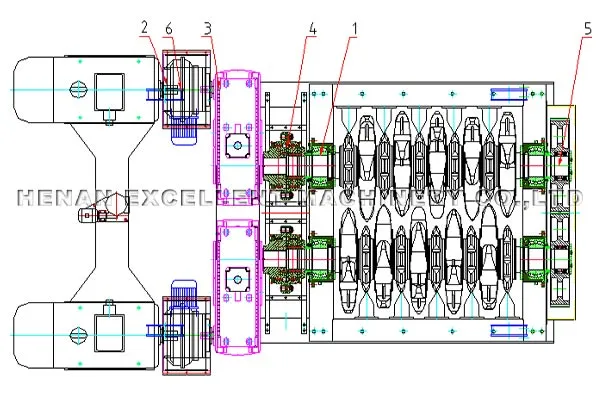
The Components Requiring Lubrication For The Coal Mining Mineral Sizer:
- The motor bearings, couplings, and synchronous gears should be disassembled and cleaned annually, and the lubricating material used is No. 3 general lithium-based lubricating grease.
- The main bearing lubricant for the coal mining mineral sizer uses ZL-2 lithium-based lubricating grease or MoS2 extreme pressure lithium-based lubricating grease. The automatic lubricating grease pump supplies the oil. The best way to supply oil is to synchronize with the main motor and provide continuous supply. Alternatively, intermittent supply can be used. The lubrication should be performed once or twice a day, with each lubrication point having a lubrication volume of approximately 6-10 mL.
- The reducer should be replenished with oil once a month based on the oil level (using an oil filter). The lubricating oil is N220 for winter and N320 for summer, medium-load industrial gear oil.
- The reducer should be cleaned and oil replaced at least once a year. Depending on the seasonal environmental temperature at the usage site, different types of gear oil can be used.
- The working water medium for the hydraulic coupling should be added when the ambient temperature is low to prevent cracking due to freezing. The oil filling volume for the hydraulic coupling must be strictly added in accordance with the usage manual of the hydraulic coupling. If the filling volume is too small, it will be unable to transmit the corresponding power. On the contrary, if the filling volume is too large, the temperature rise during operation will be high, and the fusible plug may melt, resulting in inability to work normally (the filling volume of the working medium should be between 40% and 80% of the working chamber).
►Maintenance During Operation
For the coal mining mineral sizer, during operation, check whether the bolts are loose or if there are any abnormal sounds. Also, check if there are any abnormalities in the temperature rise of the electric motor, reducer, and main bearing. During operation, the grease supply pump must operate as required to supply grease.
Disassembly And Installation Of Synchronous Gears
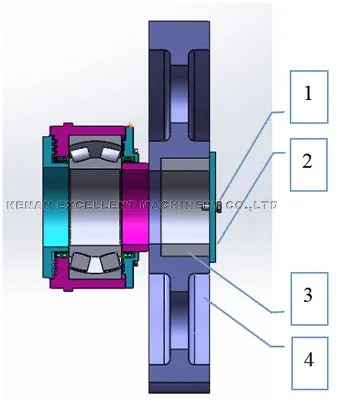
Disassembly: The synchronizing gear and the gear roller shaft are connected by an expansion sleeve. First, remove the pressure cap bolt (part 1) on the end of the synchronizing gear. Use a special tool to loosen the expansion sleeve bolts, remove the expansion sleeve (part 3), and then the synchronizing gear (part 4) can be pulled out.
Note: When installing the synchronizing gear, the expansion sleeve bolts must be tightened to the specified torque; otherwise, loosening may occur during use, leading to connection failure.
① Pressure Cover Bolt ② Pressure Cover
③ EXpansion Sleeve ④ Synchronous Gear
 Disassembly And Installation Of Couplings
The coupling is connected to the minor sizer gear roller by an expansion sleeve and to the reducer shaft by a key (see diagram below). To remove the coupling from the gear roller shaft end, simply loosen the expansion sleeve bolts. During installation, the expansion sleeve bolts must be tightened to the specified torque; otherwise, transmission failure will occur.
The coupling (as shown in the diagram) has a safety pin. During operation, the safety pin transmits torque. In the event of an overload, the safety pin will shear off to protect the power unit. Repair only requires replacing the safety pin.
- Replacement Of Safety Pins
When inedible objects such as ironware enter the crushing chamber and cause the toothed roller to get stuck and unable to crush, the coupling safety pin will be cut to achieve mechanical protection. When replacing the safety pin, simply insert the spare part safety pin (see the picture above). Note that the pin sleeve of the safety pin must not be discarded randomly, otherwise it will cause the wear of the coupling safety pin hole to increase.
Note: The specification of the safety pin cannot be changed at will; otherwise, it will fail to achieve the mechanical protection effect.
Maintenance Cycle
- Weekly inspection: Every week, check whether the bolts and nuts in each part are loose, whether the leads of the sensors are damaged, and the working conditions of the reducer and the motor.
- Monthly inspection: Check the wear condition of the broken teeth at least once every month.
- Annual Inspection: It is necessary to conduct a comprehensive inspection of the mineral sizer, disassemble and clean the bearings of the motor, reducer and crushing rollers, and remove the waste lubricating oil (grease) from the interior of the mineral sizer. Check the wear condition of the transmission components. If the wear is severe, replacement is required; replenish the hydraulic coupling with the specified amount of oil. At the same time, tighten all the bolts at each part once.
Contact Us
If you need assistance with the selection of Coal Mining Mineral Sizer, on-site operation guidelines, equipment maintenance plans, or guidance on replacing wear parts, please feel free to contact us at any time.
We can provide guidance on startup and commissioning, regular maintenance plans, and accessory services such as gears, bearings, and safety pins based on the working conditions in mines, coal mines, and metallurgical plants. We also offer one-on-one technical support for problems like lubrication selection, synchronous gear disassembly and assembly, and troubleshooting of fault shutdowns, to help ensure stable equipment operation and reduce maintenance costs.