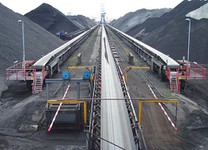
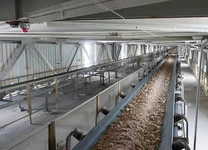
The Heavy Duty belt conveyor is favored by coal mines and various transportation industries because of its large transportation volume, but it brings economic benefits to enterprises at the same time, but it brings a lot of troubles to enterprises because of the accompanying faults. Today, let's talk about the common faults and countermeasures of the Heavy Duty belt conveyor.
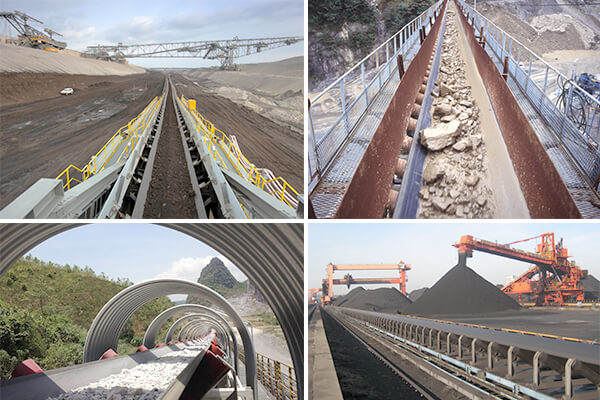
Question: Belt running deviation, skidding, and broken tape
1 Fault Causes
Generally speaking, belt deviation, skid, the fracture is common fault of the Heavy Duty belt conveyor, especially in the coal mine plant with a high load of work strength, these phenomena are normal. Generally, there are two kinds of reasons for belt deviation, slipping and fracture. One is that the Heavy Duty belt conveyor is not strictly calibrated in accordance with the instructions when it is installed, which leads to the discoincidence of the centerline of the head and tail; the other is that the roller in the long use process leads to a large difference in the friction coefficient of the surface or the error of the shaft diameter.
2 Handling Measures
(1) Installation problems lead to deviation, skidding, and fracture
Solution: For the deviation of the adhesive tape caused by installation error, it can be corrected by adjusting the bearing seat position of the nose or tail.
(2) Because of the nose, tail problems appear deviation, skid, fracture
At this time, you check out that the rubber belt is running in the direction of bearing seat A from the nose, resulting in deviation, slipping, and breaking of the rubber belt. Then adjust the bearing seat A to the movement direction of the rubber belt or the bearing seat B to the opposite direction. If it is found that the rubber belt is running in the direction of bearing seat D from the tail, resulting in deviation, slipping, and breaking of the rubber belt, Measures should be taken to adjust the bearing seat C to the belt movement direction or the bearing seat D to the opposite direction.