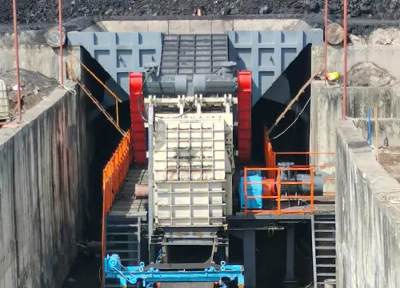
TheBucket Elevator is a mechanical device specifically designed for continuous transportation of loose materials in a vertical or nearly vertical direction.
Its application range for material handling is very extensive. It can transport powdery materials such as cement and fly ash, granular materials such as sand and mineral particles, as well as small block-shaped materials such as coal blocks and coke. For high-temperature materials like clinker and slag, or abrasive materials like quartz sand, the equipment can ensure stable operation through special material and structural designs.
From the perspective of the equipment's attributes, the bucket elevator has the characteristics of strong adaptability, high conveying efficiency, stable and reliable operation, and convenient maintenance. It is the core equipment for achieving vertical material transfer in industrial production.

Bucket Elevator Working Principle
The working principle of bucket elevators revolves around the core process of "material scooping - lifting - flipping and discharging". The working details vary slightly for different types of transmission equipment.
 ► Core Components
The main components of a bucket elevator include: the bucket, the driving device, the top and bottom rollers (or sprockets), the belt (or traction chain), the tensioning device, and the casing. These components work together to complete the vertical transportation of materials.
► Basic Working Process
When the equipment is running, the bucket scoops materials from the storage equipment below, and then is lifted upwards along the conveyor belt or traction chain. When the bucket reaches the top position, it will flip over around the top pulley and finally discharge the materials into the receiving trough, completing a complete transportation cycle.
This process is continuous and realizes the uninterrupted vertical transportation of loose materials.
► Differences In Working For Different Transmission Types
① Belt-Driven Bucket Elevator
For this type of equipment, the transmission belt usually uses a rubber belt, which is installed on the upper and lower transmission rollers and the redirecting rollers. During operation, the rubber belt drives the bucket to perform a circular motion, completing the lifting and discharging of materials, and is suitable for medium and low-load material transportation scenarios.
② Chain-Driven Bucket Elevator
The chain-driven bucket elevator is equipped with two parallel transmission chains. There is a pair of transmission sprockets on the upper or lower side, and a pair of redirecting sprockets on the lower or upper side.
The chain transmission is more stable and can withstand greater loads, making it suitable for transporting heavy and abrasive materials.
Bucket Elevator Core Structure
The stable operation of the bucket elevator cannot be achieved without the collaborative work of its various core components. Each component plays a crucial role:
● Hopper
The hopper is the core component for holding materials. Its material and design will be adjusted according to the characteristics of the materials. For example, when transporting abrasive materials, a wear-resistant material is used; when transporting materials at high temperatures, a material that can withstand high temperatures is selected.
● Drive unit
As the "power source" of the equipment, the drive unit provides stable power for the circular movement of the hopper, ensuring that the equipment can continuously and efficiently transport materials.
● Tensioning device
The function of the tensioning device is to adjust the tension of the belt or traction chain, preventing the hopper from deviating due to the slack of the belt/chain, which would affect the conveying efficiency.
● Enclosure
The enclosure forms a closed conveying path, which can not only prevent the leakage of materials during the conveying process and the flying of dust, but also protect the internal components of the equipment from the influence of the external environment.
For different types of materials and operating conditions, the component materials and structural forms of Bucket Elevators will be optimized specifically.
For example, when transporting corrosive materials, the casing and the hopper will be made of corrosion-resistant materials; when transporting large chunks of materials, the volume of the hopper will be increased and its structural strength will be enhanced to ensure that the equipment is suitable for various complex operating conditions.
Why Choose Bucket Elevators For Vertical Transport?
The bucket elevator has become the preferred equipment for vertical material transportation due to its multiple design advantages, precisely addressing industry pain points:
► Vertical Transportation, Saving Space
The bucket elevator can directly achieve vertical material transportation without occupying a large area of horizontal space, significantly saving the space in the production site.
This feature is particularly important for workshops and factories with limited space, effectively improving the utilization rate of the production site.
► High Conveying Efficiency
The equipment realizes continuous material transportation through the continuous circular movement of the traction components. This conveying method not only improves the overall conveying efficiency but also reduces the crushing and loss of materials during transportation due to the stable operation of the hopper.
► Strong Adaptability
The material adaptability range of the bucket elevator is extremely wide. It can transport conventional bulk materials such as powders, granules, and small blocks, as well as special materials with high temperatures, abrasiveness, and corrosiveness, meeting the transportation needs of multiple industries.
► Stable Operation And Reliable Performance
The equipment adopts advanced drive devices and tensioning devices to ensure the stability of the operation process. Additionally, the bucket elevator is equipped with safety protection devices. In case of overload, material jamming, or other abnormal situations, the equipment can stop immediately to avoid the expansion of accidents.
► Environmental Protection And Reduced Pollution
Since the transportation path is completely enclosed, during normal use, the bucket elevator will not have the problem of material leakage or dust emission. It can effectively prevent dust飞扬 and reduce pollution to the production environment, meeting environmental protection requirements.
► Convenient Maintenance And Low Cost
The structure of the bucket elevator is relatively simple, and the daily maintenance work is of low difficulty. The main maintenance contents include checking the tension of the traction components, the wear condition of the hopper, and the temperature of the bearings, etc. These tasks can be completed quickly, reducing the maintenance cost and downtime of the equipment.
► Large Conveying Capacity And High Lifting Height Advantages
The bucket elevator also has the advantages of large conveying capacity and high lifting height. Moreover, the overall structure of the equipment is sturdy, with a long service life, and it has significant cost-effectiveness in long-term operation.
Bucket Elevator Application
Thanks to its strong adaptability and performance advantages, the bucket elevator has become a versatile "multi-tool" for vertical transportation in multiple industries:
Food Industry
In the food processing sector, the bucket elevator can be used to transport bulk materials such as soybeans, wheat, corn, and peanuts. The sealed design of the equipment can prevent the materials from being contaminated, meeting the hygiene standards of the food industry.
Chemical Industry
In the chemical industry, the equipment can transport chemical raw materials such as alumina, potassium sulfate, potassium dihydrogen phosphate, and calcium carbonate. Some specially designed models can also transport liquid materials, adapting to the complex requirements of chemical production.
Metallurgical Industry
In metallurgical processes such as iron smelting, steelmaking, and casting, the bucket elevator is responsible for transporting materials such as iron ore, coke, and lime, capable of adapting to the high-temperature and high-dust working conditions of the metallurgical workshop.
Building Materials Industry
The vertical transfer of building materials such as cement, fly ash, and clinker is one of the main application scenarios of the bucket elevator. The large conveying capacity and high lifting height of the equipment can match the large-scale production requirements of the building materials industry.
Other Industries
In addition to the above industries, the bucket elevator is also widely used in coal, pharmaceuticals, and other fields, completing the vertical transportation of various bulk materials and becoming an indispensable equipment in industrial production.

Based on our years of manufacturing experience, choosing the right Bucket Elevator can not only solve the problem of vertical material transportation, but also create value for the enterprise from multiple aspects such as efficiency, cost, and environmental protection.
If you have specific requirements for the material characteristics, conveying volume, lifting height, etc., or if you want to customize a tailored bucket elevator solution, please feel free to contact us at any time. We have a professional technical team and rich industry resources. We can design a one-on-one solution based on your production scenario, and provide equipment selection, installation and commissioning, and after-sales maintenance services as a one-stop solution to help your production process achieve efficient and stable vertical material transportation!