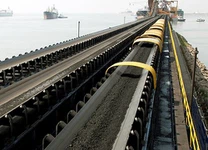
In the industrial bulk material transportation production, Tubular Drag Conveyors, Screw Conveyor, Pneumatic Conveying, and Bucket Elevator are all widely used mainstream conveying equipment. However, these four types of equipment have significant differences in terms of sealing and dust prevention, material protection effect, adaptability to complex paths, energy consumption level, difficulty of later maintenance, applicable materials, and installation layout.
As people's requirements for environmental protection and dust prevention, material integrity, energy saving and consumption reduction, utilization of site space, and long-term operation and maintenance costs continue to increase, how to select the appropriate conveying equipment based on one's own working conditions has become the key to production line planning and upgrading. Now, I will conduct a comprehensive comparative analysis of Tubular Chain Conveyors and other traditional conveying equipment from multiple core dimensions to help you clearly understand the performance advantages and applicable scenarios of each type of equipment.
Comparison Of Tubular Drag Conveyors With Other Conveying Equipment
| Comparison Item |
Tubular Drag Conveyors
|
Screw Conveyor
|
Pneumatic Conveying
|
Bucket Elevator
|
| products |
 |
 |
 |
 |
| Sealing & Dust Control | Fully enclosed system with minimal dust leakage; environmentally friendly | Open trough, usually requires covers and dust collection systems | Fully enclosed, but requires high-pressure air system | Fully enclosed; good dust containment |
| Material Integrity | Excellent; gentle conveying, almost no degradation or segregation | Shear and material damage likely | High-velocity air causes separation and product degradation | Good; gentle handling, though minor impact damage may occur |
| Adaptability to Complex Routes | High; supports horizontal, vertical, and multi-bend layouts | Limited; not suitable for complex routing | Flexible piping, but at very high energy cost | Low; mainly for vertical or limited-bend layouts |
| Energy Consumption | Low; slow speed, low power, high efficiency | Medium | Very high | High, especially for large lifting heights |
| Maintenance & Service Life | Simple maintenance, low wear, long service life | Screw flights wear quickly and require frequent replacement | High maintenance; filters and blowers require regular servicing | Medium; chains or belts require periodic inspection |
| Material Compatibility | Powders, granules, light lumps, and blended materials; very wide application range | Powders and granules; poor for sticky or caking materials | Mainly dry powders; pressure control is complex | Suitable for powders and granules, especially heavy bulk materials |
| Installation Flexibility | Very high; compact layout, space-saving | Moderate | Flexible, but requires extensive auxiliary equipment | Limited; mainly vertical installation |
| System Complexity / Initial Investment | Low | Low | High (including compressors and separation systems) | Medium |
| Noise & Working Environment | Low-noise operation, clean and quiet | Medium noise | High noise | Medium noise, especially at high lifting speeds |
If you are comparing Tube Chain Conveyors, Screw Conveyor, Pneumatic Conveying, and Bucket Elevator, and are unsure which one is more suitable for your material conditions, site layout, and budget, please feel free to contact us at any time.
We can conduct a one-on-one precise selection for you based on your on-site site, conveying path, material characteristics, environmental protection and dust prevention requirements, and investment budget, and customize a complete conveying solution for you.