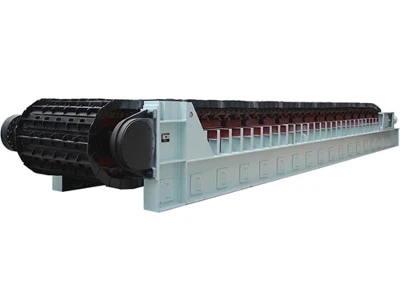
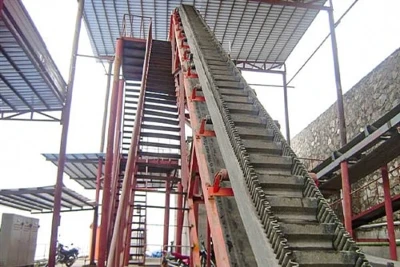
If you are an engineer at a cement plant, an equipment manager, or an EPC contractor technician, you must have encountered equipment problems related to the transportation of hot clinker.
The clinker produced at the cement production line has the characteristics of high temperature, large size, strong abrasion and strong impact. The bucket elevator is constantly exposed to heat radiation and material impact, which makes it prone to bucket damage, chain failure, casing deformation, and thus causing the production line to stop.
Many projects have hidden problems due to incorrect selection: using belt bucket elevators leads to belt tearing; using chain bucket models but with insufficient configuration will also result in bucket cracking, chain breakage, material blockage and backflow, affecting the continuous production of the kiln line.
How to select and configure bucket elevators to withstand the thermal load and material impact of hot clinker? What working conditions are suitable for each model? What key hardware is needed?
After reading this article, you will understand the damage mechanism of clinker to Bucket Elevators, the differences between mainstream models, master the complete set of solutions for materials, structure and protection, and provide references for your project selection, configuration and operation and maintenance.
What Damage Can High-Temperature Clinker Cause to a Bucket Elevator?
 Material Characteristics
- The temperature range of cement clinker is quite wide. After cooling, the temperature of the clinker is 150 - 250℃, and the uncooled clinker from the kiln can reach 300 - 400℃;
- The material is hard and highly abrasive in form. During the falling process, it will directly impact the bucket, and in addition to the high-temperature heat radiation, metal thermal expansion and alkaline dust erosion, it will further accelerate the wear and aging of the equipment components.
Common Faults
- Thermal Damage: Ordinary rubber parts will rapidly age when exposed to high temperatures; metal components will expand due to heat, which can easily cause chain jams; the ordinary lubricating grease inside the bearing will be carbonized and lost due to high temperatures, causing the bearing to fail prematurely.
- Impact Damage: Large chunks of clinker directly hit the bucket, causing the bucket to deform and weld seams to crack; the chain repeatedly withstands impact loads, resulting in elongation, and in severe cases, a chain break occurs.
- Chain Reaction: The casing deforms due to heat and the seal fails, causing dust to leak out; when the machine stops, the material rolls back, causing blockage; with a large amount of return material, the clinker crushing rate increases, and the system powder increases.
Why Is It Prohibited To Use Td Belt Bucket Elevator For Transporting Hot Clinker?
The TD belt bucket elevator relies on rubber belts as the traction components, and the upper limit of the rubber belt's temperature resistance is only 80℃.
The temperature of hot clinker far exceeds the tolerance range, which will cause the belt to crack, delaminate, and tear. Even with a short trial run, it is very likely to cause a major equipment accident.
Therefore, for the transportation of hot clinker, directly exclude the TD belt bucket elevator and choose the Chain Bucket Elevator.
Why Can a Chain Bucket Elevator Withstand High-Temperature Clinker Impact?
Customizable Material Configuration
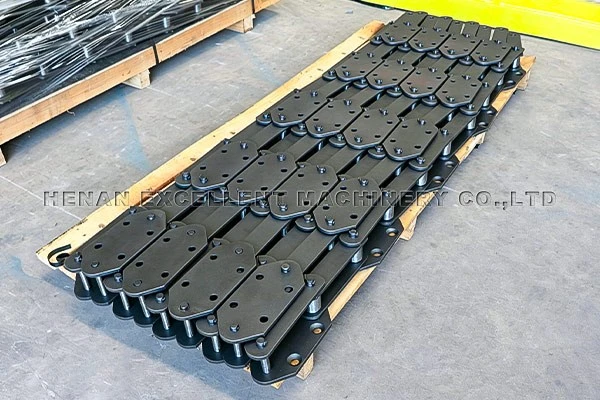
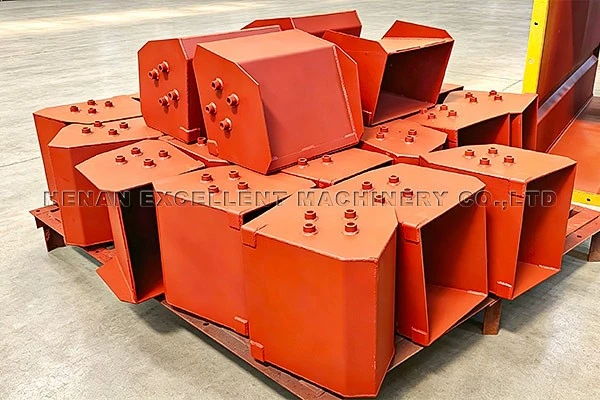
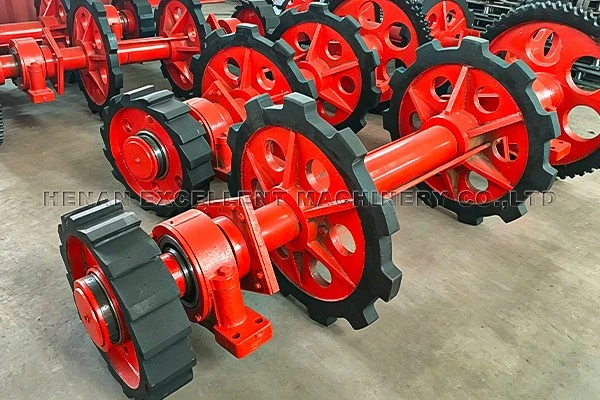
We can match specific equipment materials according to different clinker processing conditions. For regular cooled clinker, we use Q345B thickened buckets with overlay wear-resistant layer, which can effectively resist the impact and wear caused by large pieces of materials. For clinker leaving the kiln at temperatures above 250℃, we pair with heat-resistant alloy steel buckets to prevent material degradation, cracking and deformation caused by high temperatures. At the same time, our chains and sprockets are made of heat-resistant and wear-resistant alloy steel, which have both anti-oxidation and anti-shock properties, avoiding chain deformation and elongation under high temperatures. In ultra-high temperature conditions, we can also install casing insulation layers on the equipment to prevent thermal deformation of the shell and ensure on-site operation safety.
Optimize Structural Design
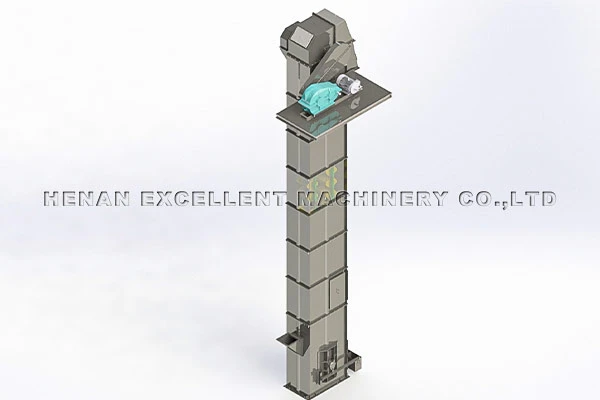
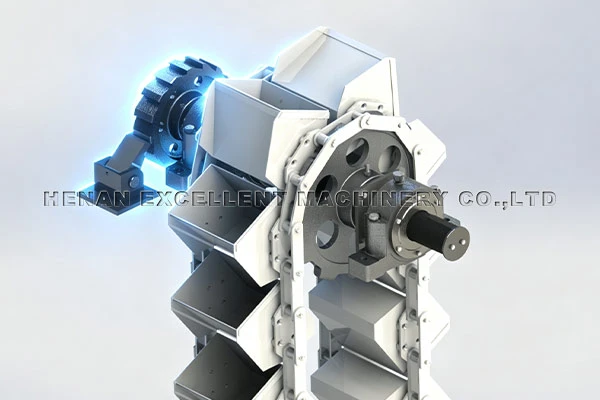
We have carried out specialized optimization of the equipment structure, adopting an inflow feeding method combined with a gravity discharge structure, allowing the materials to enter smoothly and be discharged freely. This significantly reduces the impact force caused by the fall of the clinker and minimizes material fragmentation and powder generation. We have set a floating tensioning structure at the head pulley and reserved sufficient thermal expansion reserve, effectively solving the chain jamming and blockage problems caused by metal thermal expansion under high-temperature conditions. The entire machine adopts a fully enclosed design, which not only meets the requirements of environmental protection and dust prevention but also isolates the direct blowing of cold air to the equipment components, avoiding equipment wear caused by alternating hot and cold conditions and extending the service life of the equipment.
Multiple Protection Configurations
We equip the equipment with a professional reverse braking device as standard. After the equipment stops, it can effectively prevent the hot clinker from reversing and the chain from reversing, avoiding blockage and equipment impact damage. For the characteristics of high-temperature working conditions, we provide dedicated high-temperature lubricating media to protect the chain wheels and bearings from being affected by high-temperature carbonization and loss. In extremely high-temperature scenarios, an online bearing temperature monitoring module can also be installed. At the same time, we support optional configurations such as chain elongation monitoring and machine base material level alarm to predict potential blockage and jamming hazards in advance, reducing unplanned equipment shutdowns and ensuring the stable operation of the production line.
Scientific Selection Of Working Conditions
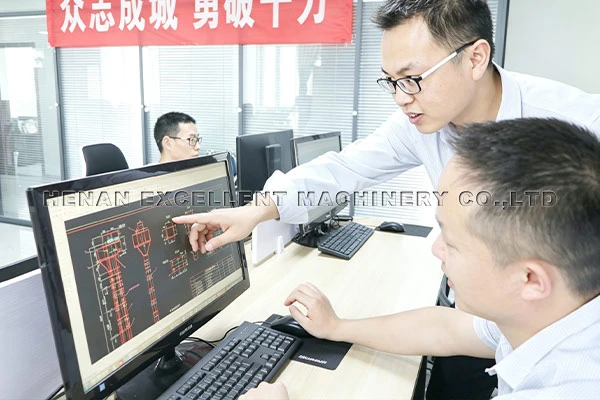
We will precisely select the equipment based on your on-site working conditions, customizing solutions according to parameters such as clinker temperature, material size, abrasiveness, conveying volume, and lifting height. For large production lines with a lifting height of over 30 meters, we recommend the more durable NE Plate Chain Bucket Elevator; for small and medium-sized production lines with a lifting height of 30 meters or less, the TH ring chain model with convenient maintenance and good cost performance is suitable. For special scenarios such as 24-hour continuous production and extremely high-temperature clinker, we can provide exclusive high-temperature customized equipment to fully meet your production and operation needs.
Recommended Types of Chain Bucket Elevators
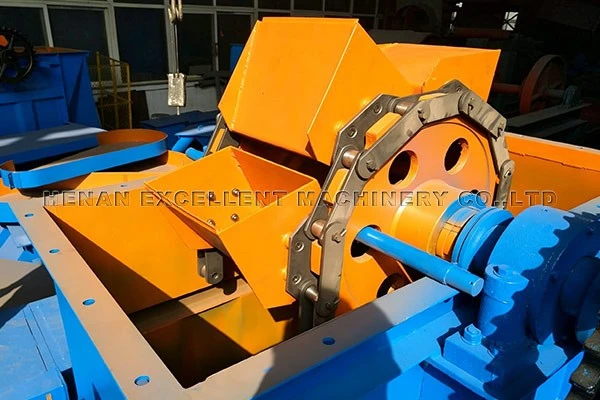
NE Plate Chain Bucket Elevator
Our NE plate chain bucket elevator uses high-strength alloy steel plate chain as the traction component. Under normal conditions, it can withstand a temperature of up to 250℃. After undergoing our high-temperature customization and modification, it can withstand a maximum material temperature of 400℃.
We adopt an inlet flow system combined with a gravity discharge structure. The amount of returned material is small, and the equipment operates smoothly, effectively reducing the crushing of clinker. This model is more suitable for working conditions with a lifting height of more than 30m. It is widely used in medium and large-sized cement plants and can continuously transport large-sized and highly abrasive clinker for a long time. The overall service life of the machine is also longer.
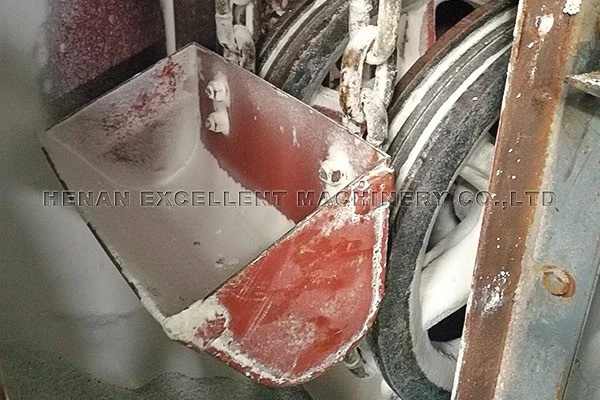
TH Ring Chain Bucket Elevator
Our TH ring chain bucket elevator uses high-strength forged ring chain as the traction component, with a maximum temperature limit of 250℃.
The ring chain bars not only have excellent toughness but also possess strong resistance to impact loads. The maintenance operation is also very convenient, and the overall cost performance is outstanding. It is suitable for small and medium-sized production lines with large clinker sizes and high impact loads, and is generally used for elevations within 30 meters.
Bucket Elevator Selection Comparison
|
Type |
Traction Component |
Maximum Operating Temperature |
Impact Resistance |
Recommended Lifting Height |
Suitable Applications |
Applications Not Recommended |
|
NE Plate Chain |
Alloy steel plate chain |
Standard: 250℃, Custom: 400℃ |
Excellent |
>30m |
Large and medium-sized cement plants, large quantities of clinker, long-term continuous production |
A small-scale short-distance operation with extremely limited budget |
|
TH Ring Chain |
Forged round ring chain |
250℃ |
Good |
≤30m |
Small and medium-sized production lines, large blocks of calcined clinker |
A lifting height of over 30 meters |
|
TD Belt |
Rubber belt |
80℃ |
Poor |
❌ |
Room temperature powder material |
Hot clinker and high-temperature materials must not be used. |
The high-temperature clinker brings bucket elevators two kinds of tests: thermal load and impact load. The selection cannot be simply based on the equipment purchase price.
First, you need to avoid the selection pitfalls of TD belt bucket elevator; combine the lifting height, clinker temperature, and material size, and choose the basic model of NE plate chain or TH ring chain.
Then, complete the hardware configuration with high-temperature resistant and wear-resistant components, thermal expansion compensation, reverse braking, casing insulation, etc.; at the same time, implement the daily operation and maintenance key points, so as to effectively resist the impact of high-temperature clinker and ensure the stable and continuous operation of the entire cement kiln line.
If you are the equipment manager of a cement plant or the EPC general contractor engineer, and are unsure about the selection of Bucket Elevator for the clinker, you need to evaluate it based on your clinker temperature, size, conveying volume, and working conditions. Please contact us. We can provide you with model selection calculation, high-temperature customized solutions, complete equipment parameters, drawings, and operation and maintenance technical materials, helping you select a bucket elevator solution that is suitable for the impact of high-temperature clinker.