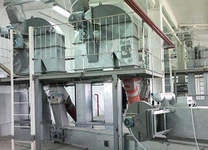
The Roller Screen, as a commonly used screening equipment in modern industry, is widely applied in various fields such as mining, chemical engineering, and construction. Due to its unique working principle and efficient screening capability, it has become the preferred equipment for handling dry, wet, and viscous materials.
Roller Screen Working Principle
The roller screen mainly involves the movement and separation of materials on the screen surface. When the rollers rotate, the materials enter the screen box from the feed port and fall onto the screen surface. The vibration of the screen surface and the rotation of the rollers work together to disperse the materials on the screen surface and allow them to pass through the sieve holes for screening.
Materials of different particle sizes and shapes move at different speeds and trajectories on the screen surface, thereby achieving the classification of the materials. The materials that meet the requirements pass through the sieve holes and are discharged, while the materials that do not meet the requirements remain on the screen surface and wait for the next screening.
Roller Screen Unique Structure
The screen shaft adopts a unique cross-axis structure design, enabling the materials to form a regular movement trajectory during the screening process. This design effectively avoids the common clogging and entanglement phenomena found in traditional Roller Screens, improving the screening efficiency.
Additionally, each screen disc of every screen shaft is equipped with a self-cleaning device. When the moisture on the material surface is too high, some of the materials attached to the screen disc will be automatically cleared away by the cleaning device, thus solving the problem of screen surface blockage.


Screen Shaft Replacement Procedure
The screen shaft is an important component of the Wobbler Feeder. Its quality and performance directly affect the screening effect and the service life of the equipment. Therefore, when the screen shaft is severely damaged, a new screen shaft should be replaced promptly.
The following are the specific steps for replacing the screen shaft:
- Shutdown Inspection
- Remove The Old Screen Shaft
- Clean The Screen Frame
- Install The New Screen Shaft
- Inspection And Adjustment
Screen Shaft Maintenance Methods
In order to ensure the normal operation of the roller screen and extend its service life, regular maintenance and care of the screen shaft should be carried out.The specific methods for maintaining the screen shaft are as follows:
- Regularly Check The Lubrication Status
The lubrication condition of the Disc Screen directly affects the operation quality and service life of the equipment. Therefore, it is necessary to frequently inspect the lubrication status at each lubrication point and add lubricating oil or grease regularly. When adding lubricating oil or grease, it is important to choose the appropriate type of lubricant and the lubrication cycle.
- Check The Fastening Bolts
- Clean The Screen Shaft And Sieve Holes
- Replace Worn Parts
- Regular Maintenance
If you have any needs or problems regarding the selection of Roller Screen, prevention of blockage in wet sticky material screening, disassembly and replacement of screen shafts, daily maintenance and upkeep, procurement of wear-prone parts, etc., please feel free to contact us at any time.
We can provide customized screening solutions based on different material conditions in mines, chemical industries, and building materials. We offer practical guidance for screen shaft replacement, regular maintenance plan planning, and provide original factory-compatible screen shafts, screen discs, and self-cleaning accessories. We comprehensively solve problems such as screen surface blockage, screen shaft wear, and cumbersome disassembly and assembly, ensuring the long-term stable and efficient screening of roller screen.