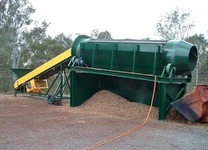
Everyone knows that the polyurethane screen of the flip flow screen is a common type of screen. With the continuous development of the screen industry in our country, the application of polyurethane screens has become increasingly widespread. So, what are the characteristics of the flip flow screen polyurethane screen? How is it different from traditional screens? Let me explain it to you below.
Flip Flow Screen Polyurethane Screen Description
The polyurethane screen of the flip flow screen is made of pure imported polyurethane raw materials and is in the form of square or rectangular mesh products. It is suitable for screening materials that are fine, sticky, wet (such as fine particles in high moisture raw coal and coal) that are difficult to sieve.
Especially when the processed materials are prone to clogging the screen, in this case, the polyurethane screen of the Flip Flow Screen can achieve very high screening efficiency under a relatively small screening area, and at the same time, it can ensure that the screen surface is not blocked.


Flip Flow Screen Polyurethane Screen Features
High Wear Resistance
It uses imported polyurethane material and the sieve surface structure has been strengthened. The service life can reach 8-10 months, and in some scenarios it can even exceed 1 year. It is 8-10 times that of ordinary metal screen, significantly reducing the frequency of equipment shutdown for screen replacement and the cost of purchasing accessories. The wear resistance of the polyurethane screen is 3-5 times that of ordinary screens. It wears slowly and is less likely to break; while ordinary screens have poor wear resistance, are prone to wear and breakage, and require frequent replacements.
Extremely Strong Self-Cleaning Ability
The polyurethane screen has elasticity. The surface of the screen constantly expands and contracts at a speed of 800 times per minute, generating a high acceleration (50g), causing the materials adhered to the screen to automatically fall off under the mechanical force, reducing the clogging rate by more than 75%. It can achieve continuous and uninterrupted screening without the need for manual cleaning. In contrast, ordinary screens are rigidly fixed and only perform up and down vibrations. Wet sticky materials are prone to stick to the screen and cause clogging, requiring frequent shutdown for cleaning, which seriously affects efficiency.
High Screening Efficiency
The opening rate of ordinary screen meshes is mostly between 50% and 60%, and the vibration mode is single, causing the materials to easily stick and accumulate on the screen, resulting in low screening efficiency. The Flip Flop Screen polyurethane screen has an opening rate of up to 70% to 85%. Combined with the high-frequency oscillation movement (with vibration intensity reaching 30-50g, far exceeding the 5-15g of ordinary screen meshes), the materials are rapidly dispersed and stratified on the screen surface. Fine particles are efficiently screened, while coarse particles are quickly conveyed. The screening efficiency is increased by more than 30% compared to ordinary screen meshes, and the particle size grading error is small, precisely meeting the strict requirements of the coal and mining industries for material particle size.
Impact Resistance
The flip flow screen polyurethane screen adopts a bar-like or plate-like structure, with excellent elasticity. It can absorb the impact energy of large pieces of material and is not prone to breaking or deforming. Ordinary metal screens have strong rigidity but are brittle, and are prone to local damage and mesh cracking when subjected to the impact of large pieces of material. Their structural stability is poor, and they are not suitable for screening coarse particle mixed materials.
Suitable For Different Scenarios
Ordinary screens are suitable for dry and non-viscous materials, while the expandable polyurethane screen is specifically designed for wet and sticky, fine materials, materials prone to clogging, and high wear conditions. For example, in scenarios where ordinary screens "can't handle", such as sand and stone screening during the rainy season or coal slurry treatment in coal mines, this expandable polyurethane screen has much better adaptability and stability than ordinary screens.
Flip Flow Screen Polyurethane Screens VS Conventional Screens
 Traditional mining precision screens usually employ metal woven or nylon precision screens. The metal woven screens have poor wear resistance and corrosion resistance, so they need frequent replacement, which results in high labor intensity, high cost, poor elasticity of the screens, and fixed size of the screen holes. During screening, it is prone to cause screen hole blockage, affecting the screening power, and the operation is accompanied by high noise.
The nylon precision screen mesh is formed by injection molding of thermoplastic nylon. Due to the limitations of the thermoplastic molecular injection molding technology, it is impossible to produce large single-piece screen meshes. During use, only small screen meshes can be connected together. Due to the large gap in the connection, the screening defect is large, the opening rate of the screen mesh is low, usually less than 10%, and the screening force is also extremely low.
The polyurethane screen of the flip flow screen makes up for the shortcomings of ordinary screens. It features a high standard, good elasticity, good wear resistance, light weight, long service life, low noise, and does not require splicing during use. The overall cost of use is lower, and it is widely used in industries such as mining, coal washing, coal, iron ore, metallurgy, and water conservancy!
If you are facing problems such as wet and sticky material screening, blocked holes in the screen, frequent replacements, and low screening efficiency, and you want to gain a deeper understanding of the selection, adaptation solutions and practical application effects of Flip Flow Screen polyurethane screens, please feel free to contact us at any time.
We have a professional technical team that can provide one-on-one screen solution customization, on-site working condition diagnosis, and efficient anti-blockage screening solutions based on your material characteristics, working conditions and production capacity requirements. With high wear resistance, strong self-cleaning ability and high screening efficiency polyurethane screens, we can help you reduce the blockage rate, shorten the downtime for replacing screens, and improve the overall production efficiency.