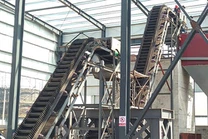
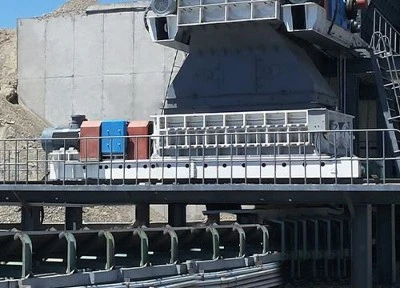
If you are running an organic fertilizer factory or engaged in the EPC engineering design of fertilizers, you will surely feel the industry changes brought about by the global circular agriculture trend. Nowadays, various countries and regions are vigorously developing the organic fertilizer industry, and the processing projects of livestock manure and straw compost are continuously increasing. Upgrading your factory's automated production lines is already an inevitable development direction for global fertilizer enterprises.
During your production process, you are likely to have encountered various troubles caused by traditional conveying equipment: intermittent conveying, limited material compatibility, dust spreading everywhere, loss of volatile nutrients, and difficulty in upgrading old factories. These problems are currently restricting the further improvement of your factory's production efficiency. You may also have such questions: Under the general trend of upgrading organic fertilizer production lines, why are tubular drag conveyors being increasingly preferred by more and more organic fertilizer factories worldwide and replacing the original conveying equipment?
After reading this article, it may help you understand the working principle of Tubular Drag Conveyors, see the differences between them and traditional conveying equipment, and obtain professional reference basis for selecting your factory and engineering projects.
 What Are Organic Fertilizer-Specific Tubular Drag Conveyors?
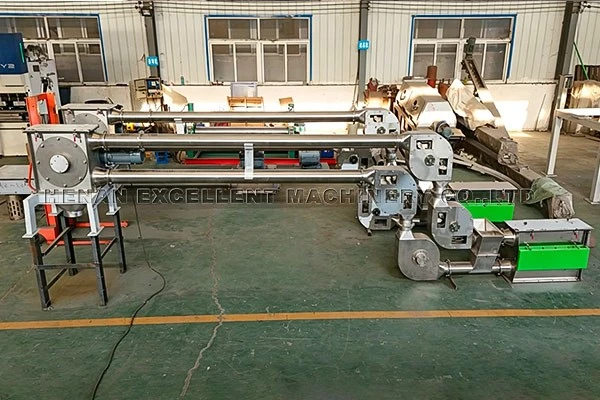
Tubular drag conveyors are a type of closed-pipe continuous conveying equipment that can achieve three-dimensional combined horizontal, inclined, and vertical transportation. It relies on a closed-loop chain to drive the disc to rotate continuously within the pipeline. The disc's thrust forms a stable material flow, which can be adapted to the transportation of various types of loose materials such as powders, small particles, small blocks, and high-humidity paste-like materials. They are widely used in industries such as fertilizers, chemicals, pharmaceuticals, and metallurgy.
No matter where you are in the world, organic fertilizer production will face similar material challenges:
The material forms are diverse, including fine powder, particles, fermented small blocks, and high-water-content, high-viscosity paste-like decomposed raw materials;
Some raw materials contain volatile nutrients such as nitrogen and sulfur, and during the transportation process, nutrient loss is prone to occur;
Some materials have slight corrosiveness, and there are certain requirements for the corrosion resistance of the equipment material;
The production line is long, and multiple points of feeding and discharging are often required. Your workshop layout will also have significant differences.
Your organic fertilizer production line may previously have used belt conveyors, screw conveyors, or bucket elevators.
However, these traditional equipment generally have shortcomings such as poor material adaptability, insufficient sealing, and limited layout forms, making it difficult to fully meet the needs of modern organic fertilizer production.
Tubular Drag Conveyors Working Principle
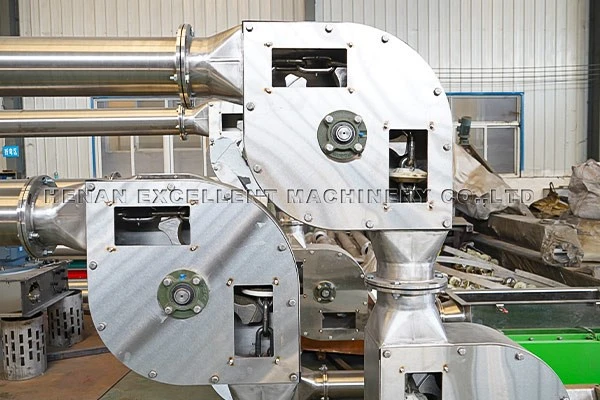
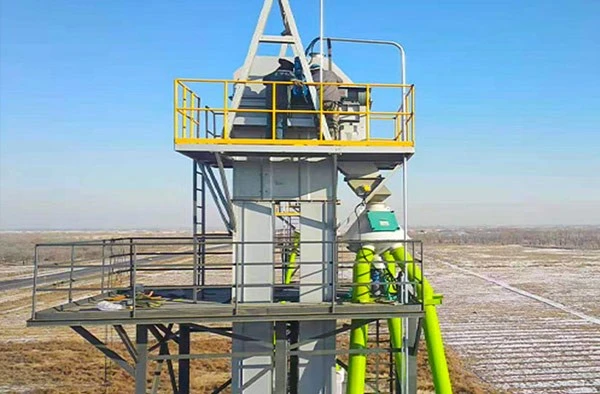
The entire equipment mainly consists of drive device, traction chain, wear-resistant disc, closed transportation pipeline, corner sprocket housing, automatic tensioner, inspection port, and one or more sets of inlet and outlet ports. Additionally, it is equipped with an electrical control system.
When transporting horizontally, the material particles are pushed by the chain & disc in the direction of movement. When the internal friction force between the material layers is greater than the external friction force between the material and the pipe wall, the material moves forward with the chain & disc, forming a stable material flow; when transporting vertically, the material particles in the pipe are pushed by the upward thrust of the chain & disc. Due to the prevention of the upper part of the material from sliding down by the lower part of the feeding, a lateral side pressure is generated, thus enhancing the internal friction force of the material. When the internal friction force between the materials is greater than the external friction force between the material and the inner wall of the pipe and the material's own weight, the material moves upward with the chain & disc, forming a continuous material flow.
Tubular Drag Conveyors Core Advantages
Compatible With Various Forms Of Organic Fertilizer Raw Materials
Tube Chain Conveyor can stably transport finished organic fertilizer powder, granular fertilizers, and crushed fermented small block raw materials, even when facing high-water-content, highly viscous decomposed paste-like raw materials, they can maintain continuous feeding. You don't need to purchase multiple different types of conveying equipment, a single equipment can meet the transfer requirements of various materials; at the same time, our equipment supports various material selection such as carbon steel, 304 stainless steel, and 316 stainless steel, which can resist the slight corrosion of organic fertilizer materials, and is suitable for various raw material conditions in your local area.
Preservation Of Fertilizer Nutrients
Our tubular drag conveyor adopts a closed-pipe structure throughout, which can inhibit the escape of volatile components such as nitrogen and sulfur, maximize the retention of the effective nutrients of organic fertilizers, and prevent the deterioration of fertilizer quality during the transportation process. The materials are transported throughout the pipeline, which can prevent dust, mosquitoes and other external impurities from mixing in, ensuring the purity of the finished organic fertilizer. Moreover, there is no dust leakage during the transportation process, meeting the occupational health, safety production and environmental protection regulations of your country's factory, effectively improving the working environment of the workshop.
Compatible With Various Factory Conditions
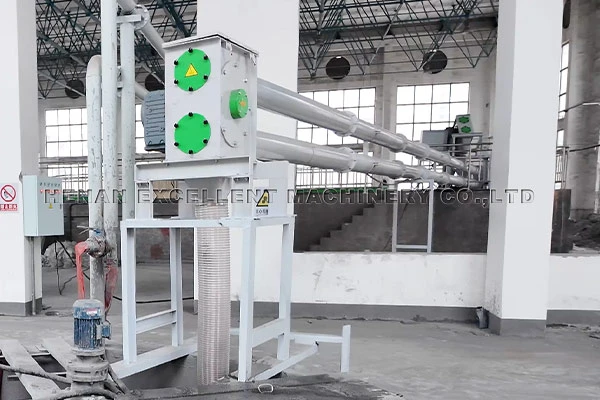
The tubular drag conveyor can achieve multi-path free combination transportation in horizontal, vertical and inclined directions, and can also flexibly turn and bypass the obstacles of factory beams and columns and existing production equipment; a single set of equipment can be equipped with multiple input and output ports, smoothly connecting the fermentation, mixing, granulation, screening, packaging and other full-process procedures, helping your factory achieve fully automated production; our equipment supports non-standard customization, and can be designed according to the space dimensions of your original production line, without large-scale demolition and renovation of the factory during the transformation, helping you save the cost and time of technical transformation.
Stable Operation
The output material flow of the tubular drag conveyor is continuous and uniform, which can provide stable supply for the subsequent processes such as granulation and batching, reducing production fluctuations and improving the qualified rate of your finished products; our equipment supports variable frequency speed regulation and material flow monitoring, and can directly connect to the central control system of the entire organic fertilizer production line, achieving automated unmanned transportation; for vulnerable parts such as chains and discs, we have reserved a centralized inspection port, regardless of where your production site is located, you can quickly complete the inspection and replacement of parts, reducing the difficulty of daily operation and maintenance.
Tubular Drag Conveyors VS Traditional Organic Fertilizer Transport Equipment
| products |
Tubular Drag Conveyors
|
Belt Conveyor
|
Screw Conveyor
|
Bucket Elevator
|
| Comparison Type |
 |
 |
 |
 |
|
Material Adaptability |
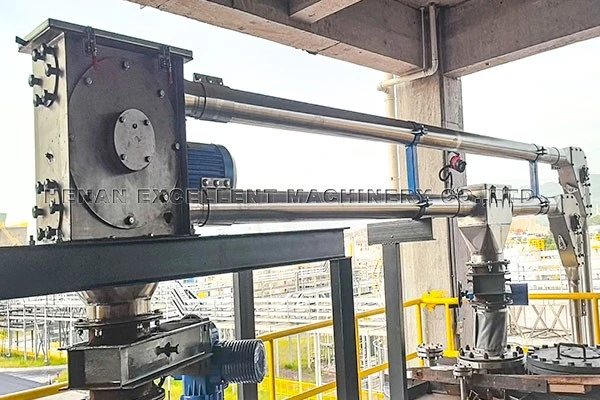
Powder materials, granules, small pieces, and highly humid paste-like materials can all be transported. |
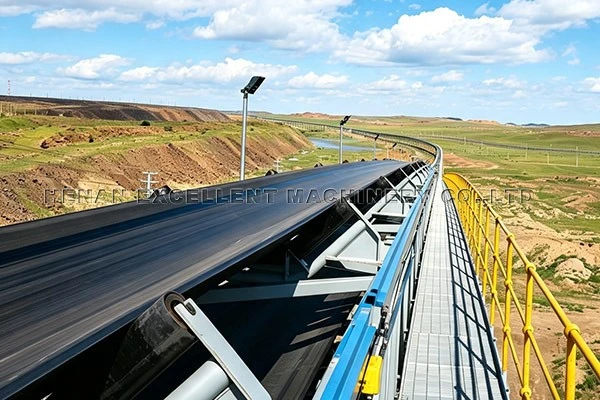
Suitable for granular and block-shaped, highly wet and viscous materials that are prone to sticking and slipping |
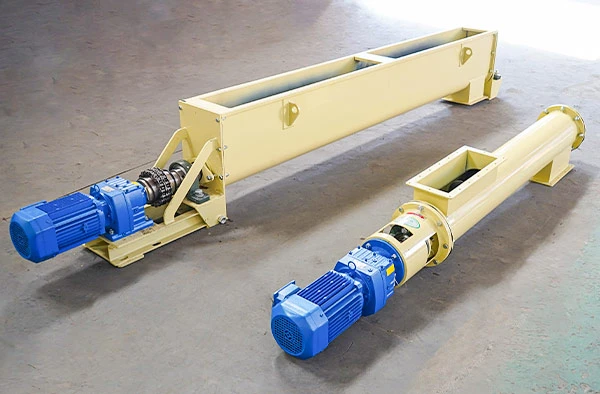
Suitable for powder materials, large pieces and highly viscous materials are prone to getting stuck in the machine. |
The materials are mainly in the form of granules or small pieces. The paste-like and sticky materials are prone to adhere and clog. |
|
Sealing Performance |
Fully sealed, with no dust leakage outside. |
Open type, with a lot of dust |
Partially sealed, with powder leakage at the end. |
Semi-enclosed, with the feeding and discharging positions prone to dust flying. |
|
Layout Flexibility |
Can perform three-dimensional turning in horizontal, vertical and inclined directions, and have multiple points for loading and unloading. |
Only suitable for horizontal or small incline angles, unable to lift vertically. |
Linear conveying, with poor turning ability |
Only vertical lifting is possible, and there is no long-distance horizontal transportation. |
|
Nutrient Loss |
Low volatility, good nutrient retention |
The materials are exposed, resulting in significant loss of nutrients. |
There is a volatile leakage at the end. |
The nutrients at the inlet and outlet are prone to volatilization. |
|
Cost Of Renovating The Old Factory |
It can be adapted to the original factory building without significant modifications, resulting in low renovation costs. |
Requires a large installation space and is subject to limited renovation. |
Subject to the constraints of linear installation conditions |
The civil construction and installation conditions impose numerous constraints. |
If you are undertaking an upgrade of your production line, then tubular drag conveyors will be worth your close attention. It boasts multiple core advantages such as strong material compatibility, sealed protection of fertilizer nutrients, three-dimensional flexible layout, compatibility with old factory renovations, and ease of integrating automated systems. It can completely help you solve a series of pain points in production, such as complex material forms, nutrient loss due to evaporation, dust pollution in the workshop, and the difficulty of factory renovation. Of course, this is why more and more organic fertilizer processing plants around the world choose Tubular Chain Conveyors to complete the upgrade and replacement of their production lines.
If you are the person in charge of an organic fertilizer factory, the EPC general contractor of fertilizers, or an overseas project engineering designer, when planning the upgrade and transformation of your production line and facing complex materials, limited factory space, or uncertainty about the transportation solutions, pipe specifications, equipment materials, and three-dimensional line layout for high-humidity, powder, and granular organic fertilizers, please contact us. We will conduct a condition assessment and capacity calculation based on your material characteristics, production capacity, and actual conditions of the workshop, provide a non-standard customized tubular drag conveyor solution package, support global project technical collaboration, and provide complete equipment operation and maintenance technical materials to help you efficiently solve various problems in organic fertilizer transportation.